

Avro Lancaster FM 159
As a follow up to the build series of theRevell Avro Lancaster Mk.I/III 1/72 Scale 04300, we now some images of the Avro Lancaster FM 159 at Nanton, Alberta. Enjoy
On the Alberta prairies, amongst the endless horizon wheat fields and farm equipment, you’ll find a unique oddity in the town of Nanton. A fully restored and taxiable Avro Lancaster bomber. Housed at the Bomber Command Museum of Canada, you will find FM 159. This bomber turned in for active duty just weeks after the war ended. It was flown to the UK, where it was then returned to Canada, for Operation Tiger Force. This was a redeployment of British and Canadian Bombers bound for the war in the Pacific.
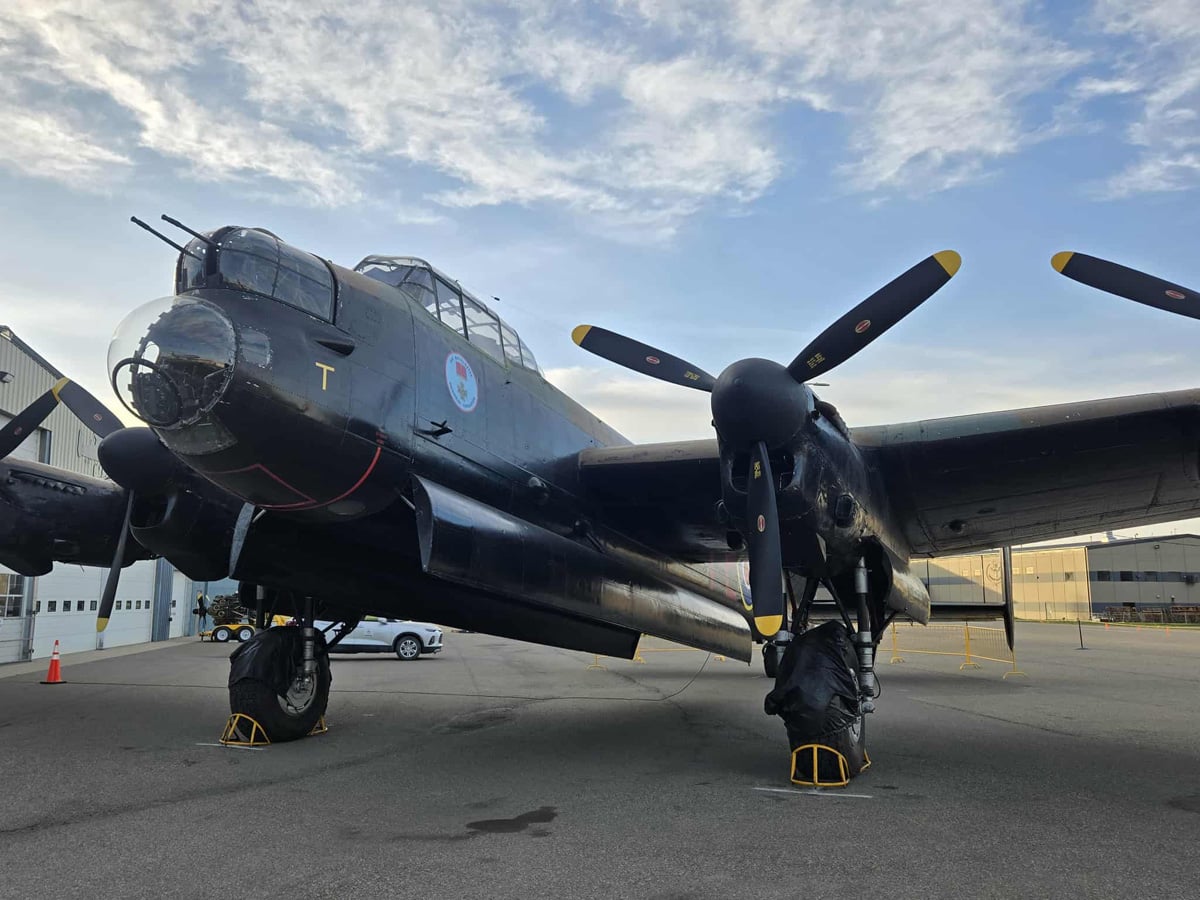
However, with the surrender of Japan only a few months later, Tiger Force was disbanded, and FM 159 was one of a few Lancasters to be used for post-war service. This included a refitting of more modern equipment, so that the Lancasters could operate around the Pacific and Atlantic coastlines.
When FM 159 was retired, she was bought by a group of volunteers who wanted to preserve the bomber in memory of the Canadians who fought with Bomber Command. For many years, she sat outdoors exposed to the elements, vandals, and treasure hunters. Before a proper hanger could be built, a lot of her interior was gutted and stolen. So many of the instruments and equipment you’ll find aren’t original to FM 159 but sourced from various places.
I would also note that this is a later version of Lancaster with widened Hamilton properllers, and treaded tires. Around the rear turret, it’s missing the definitive curved cam ring, which many or most late-war Canadian Lancasters didn’t have.
For a more detailed look into FM 159, I highly recommend reading “FM 159 -The Lucky Lancaster”, by Dave Birrell. Which is available on the Bomber Command Museum of Canada website.
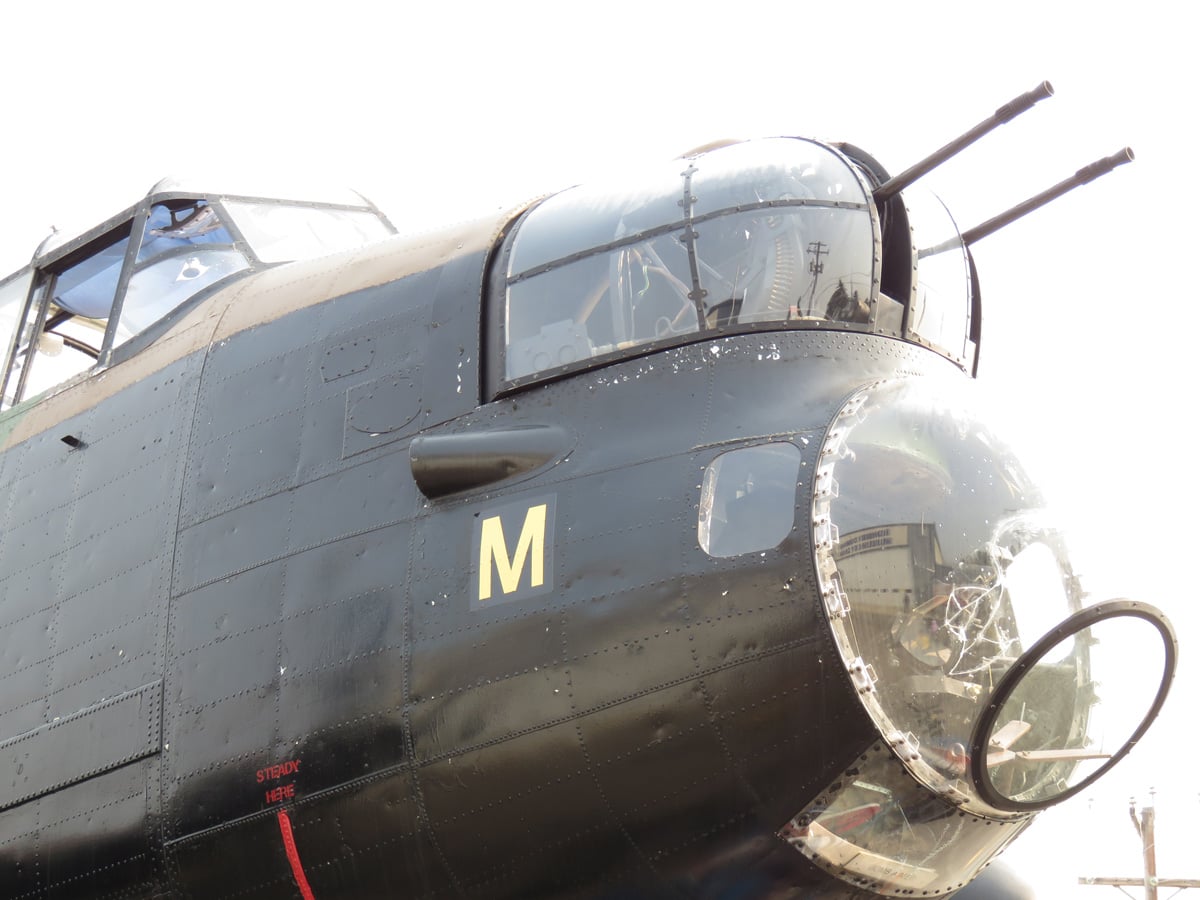
Looking up at the nose, you can see the bomb aimer’s station and the twin 303. machine guns in the nose turret.
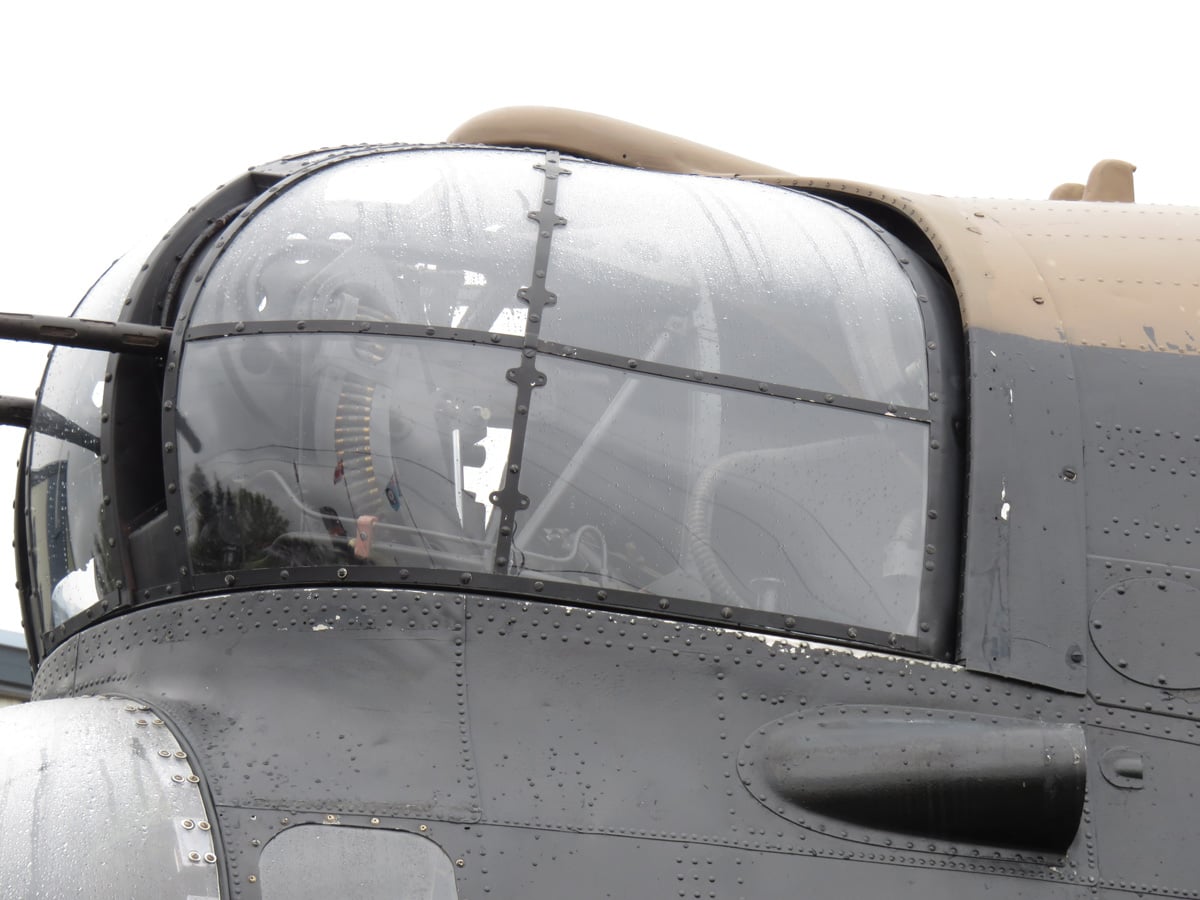
A close look at the turret, and you can see the rounded air vent just below.
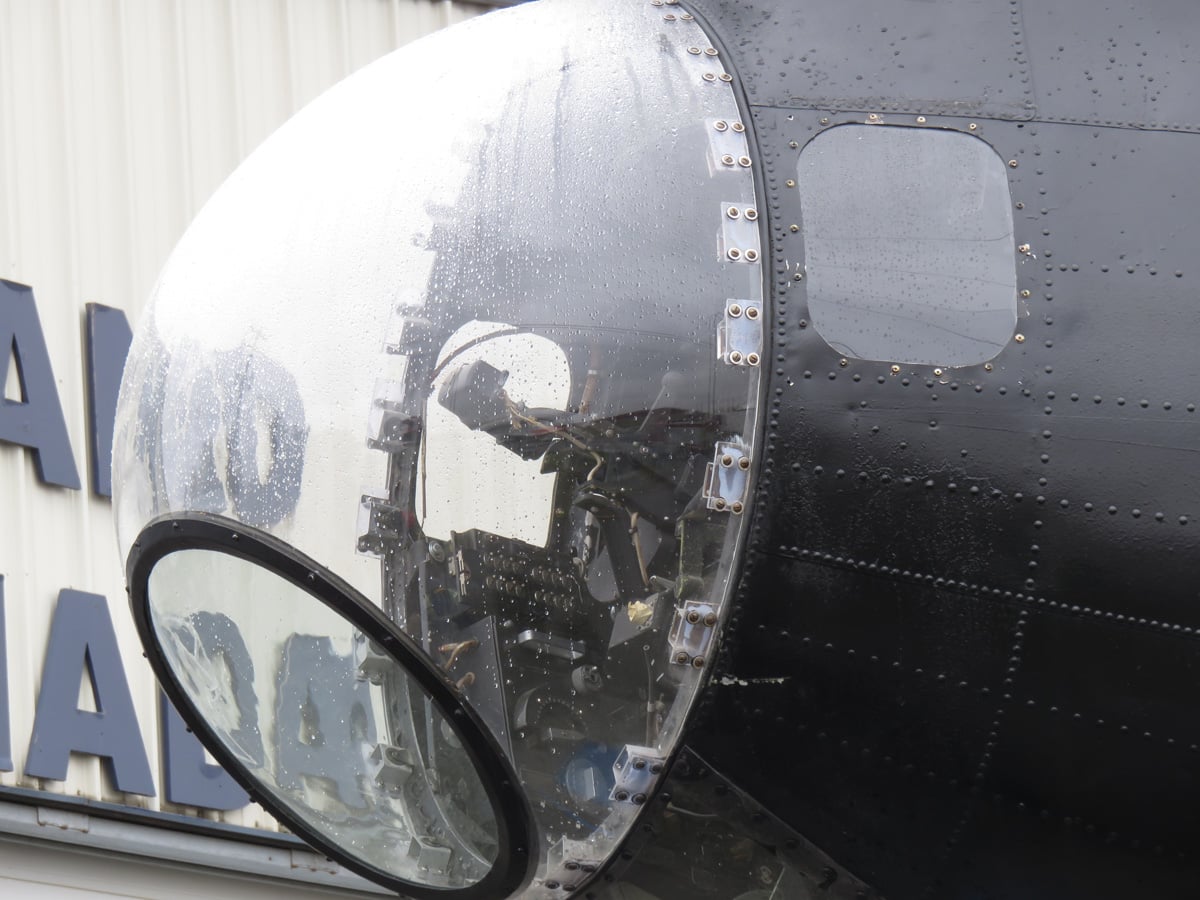
A closer inspection of the bomb aimer’s window shows the many brackets that keep the nose fitted to the aircraft. Some early Lancasters, as well as the Mk.II variant used a shorter, more blunt nose window.
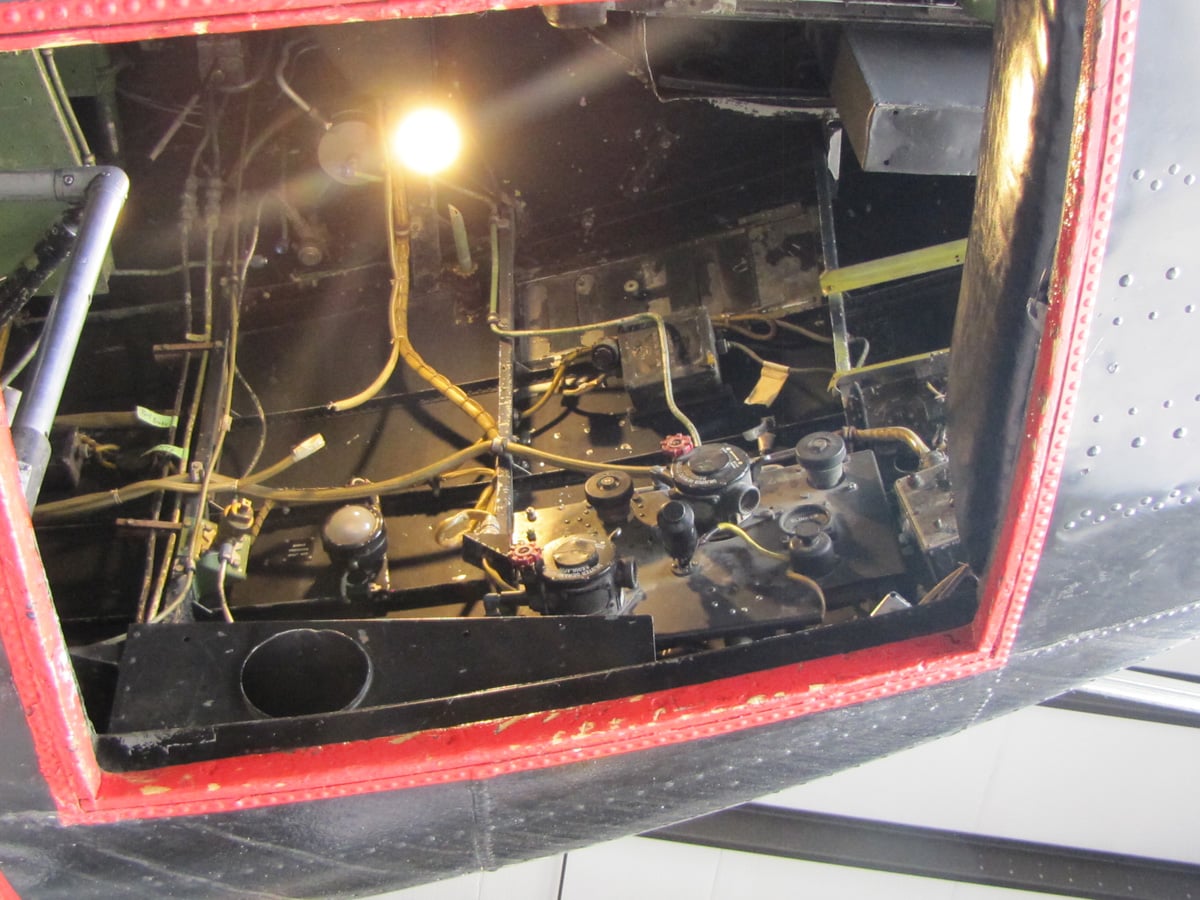
Looking up through the nose access hatch, on the port side of the bomb aimers’ station, you can see various equipment, including oxygen controls.
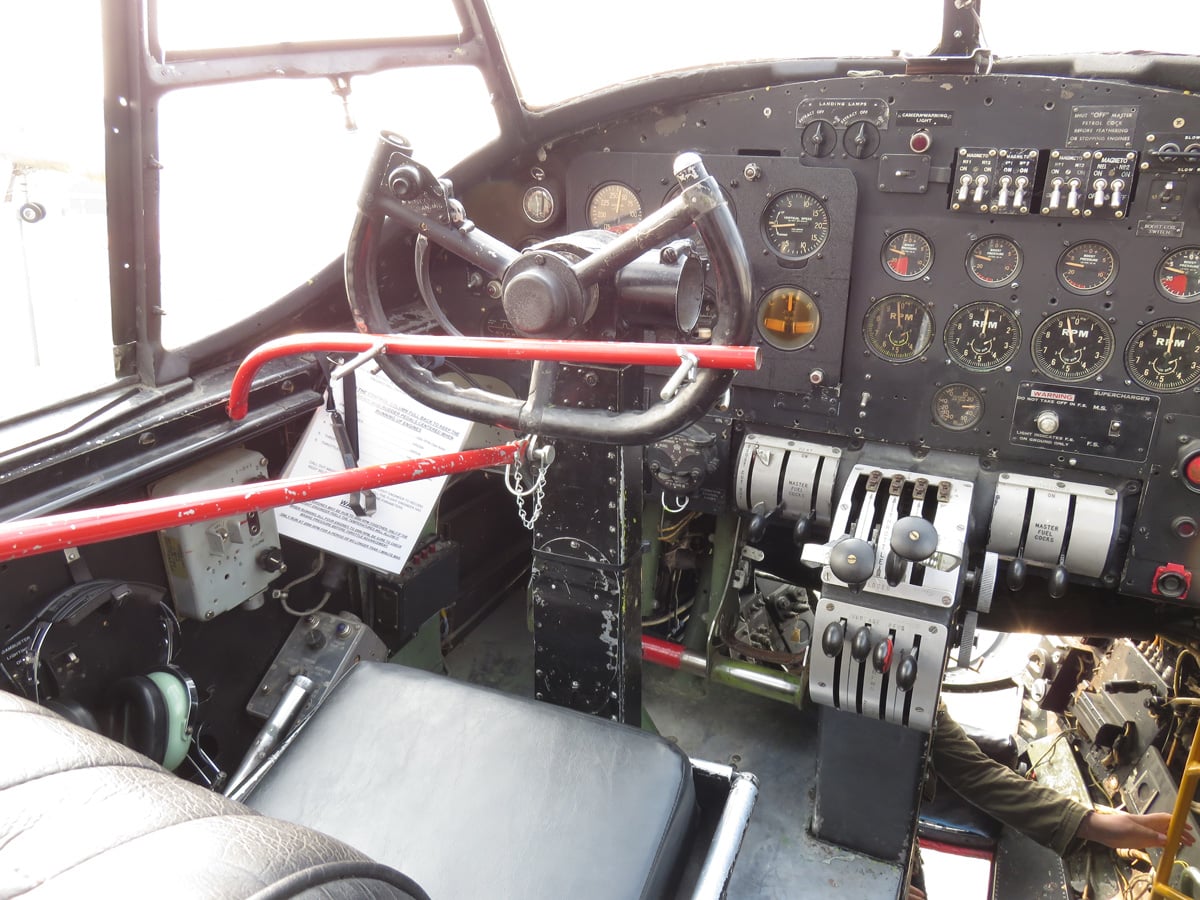
Climbing through to the cockpit, we can see the pilot’s station and flight controls. In the center section surrounded by silver are the throttles and pitch controls. The red bars are removable and only placed there to prevent visitors from fiddling with the aircraft.
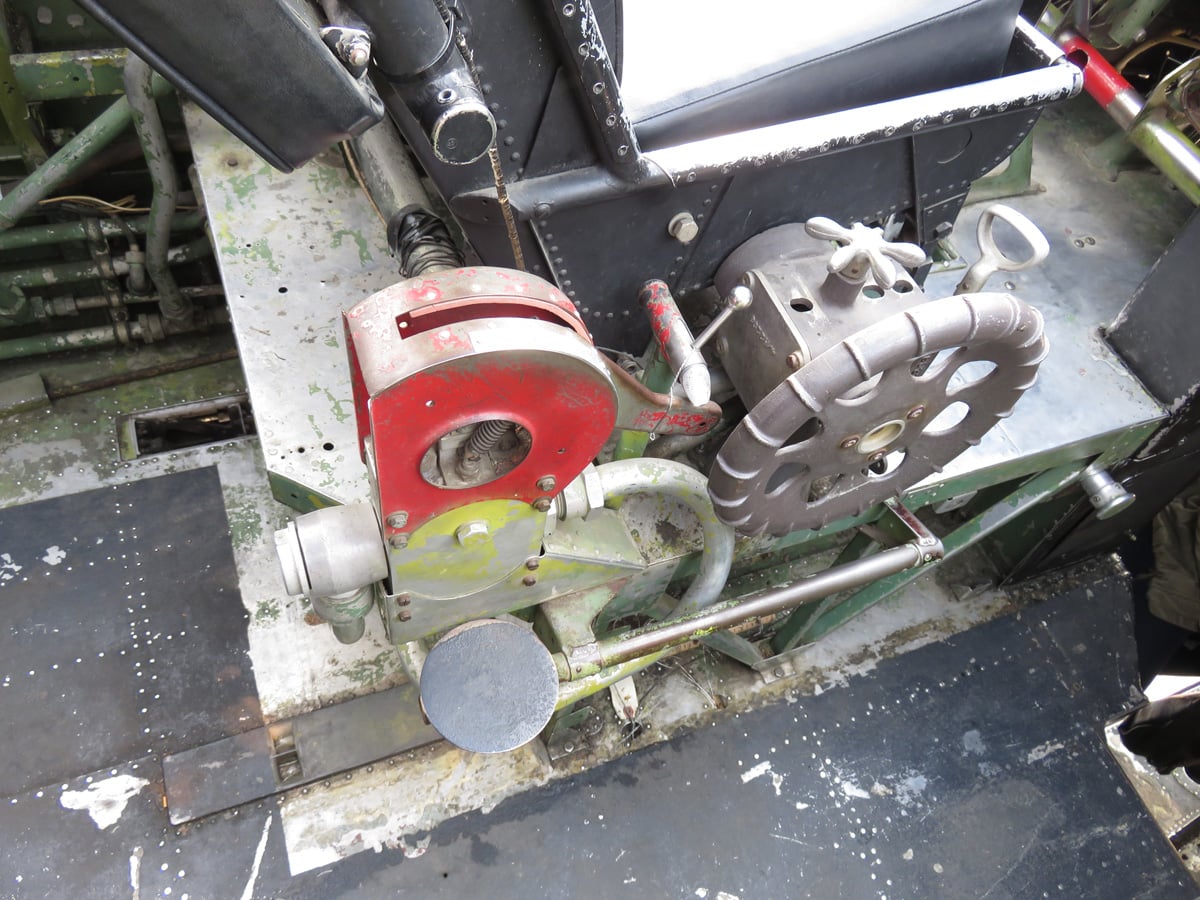
Just below and to the right of the pilot are the trim and flap controls. The big red section is the landing gear selector.
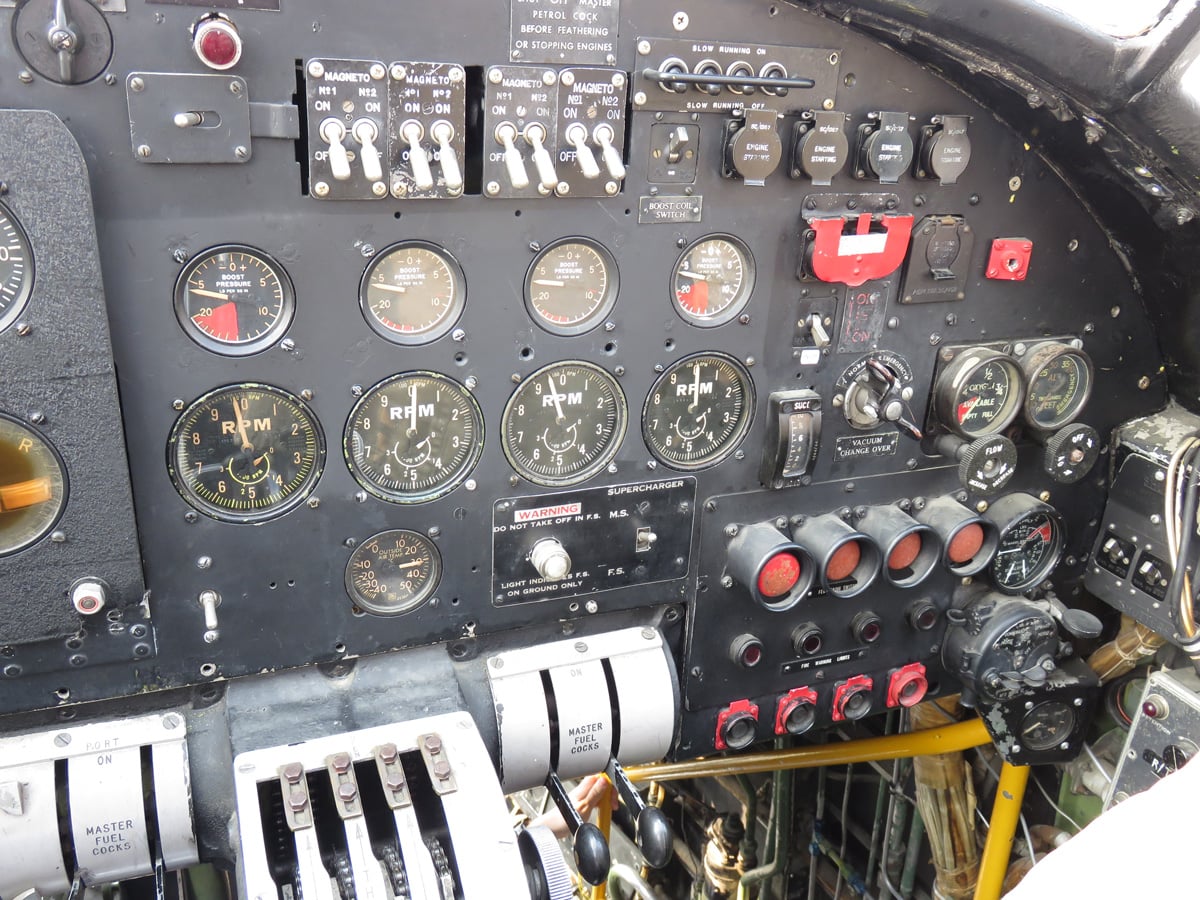
To the right, you can see the rest of the instrument panel. At the top are the silver switches for each of the engines’ magnetos. And just the right are the engine starter buttons. The red buttons below would be pushed to feather the props in an emergency.
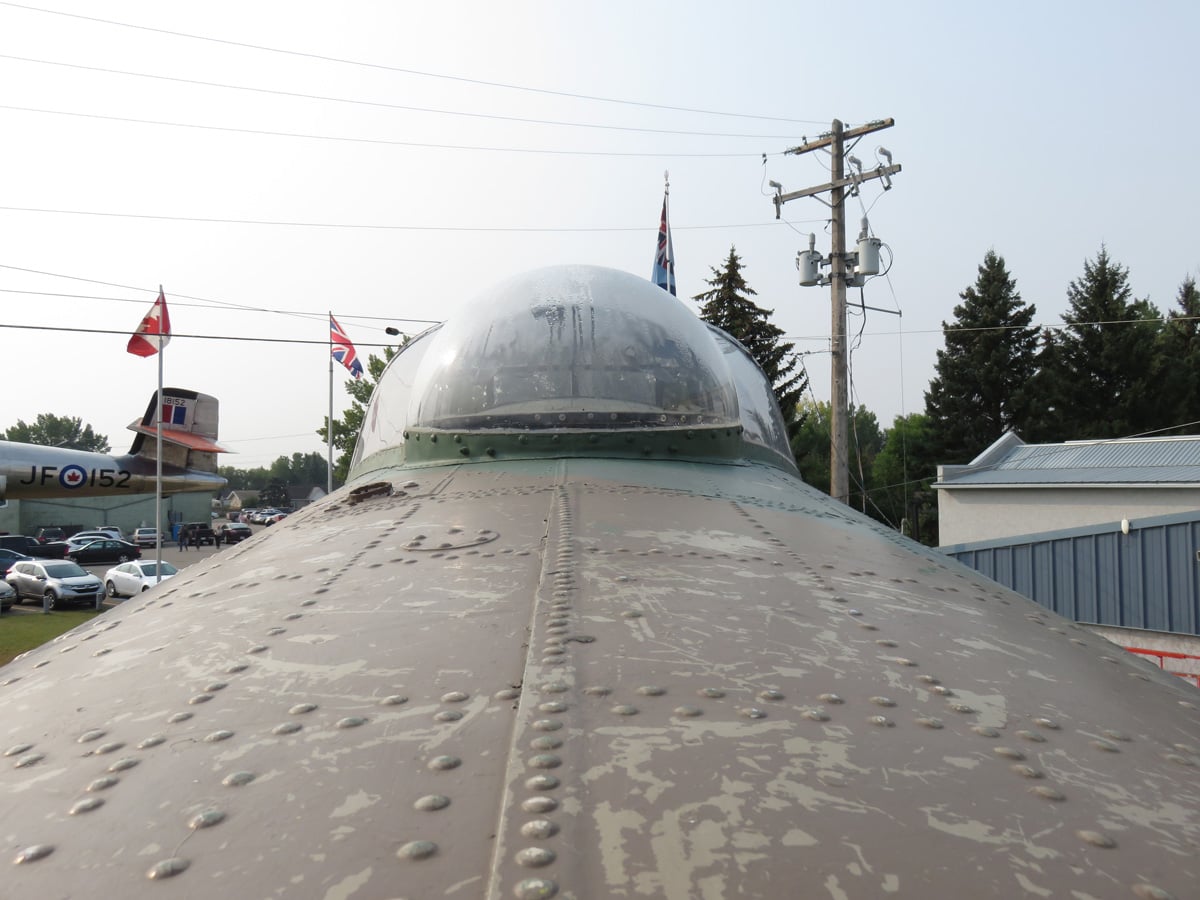
An exterior view of the Astro Dome from one of the emergency escape hatches on the top of the fuselage. Note the small hole just on the left side; this was where flares were launched from.
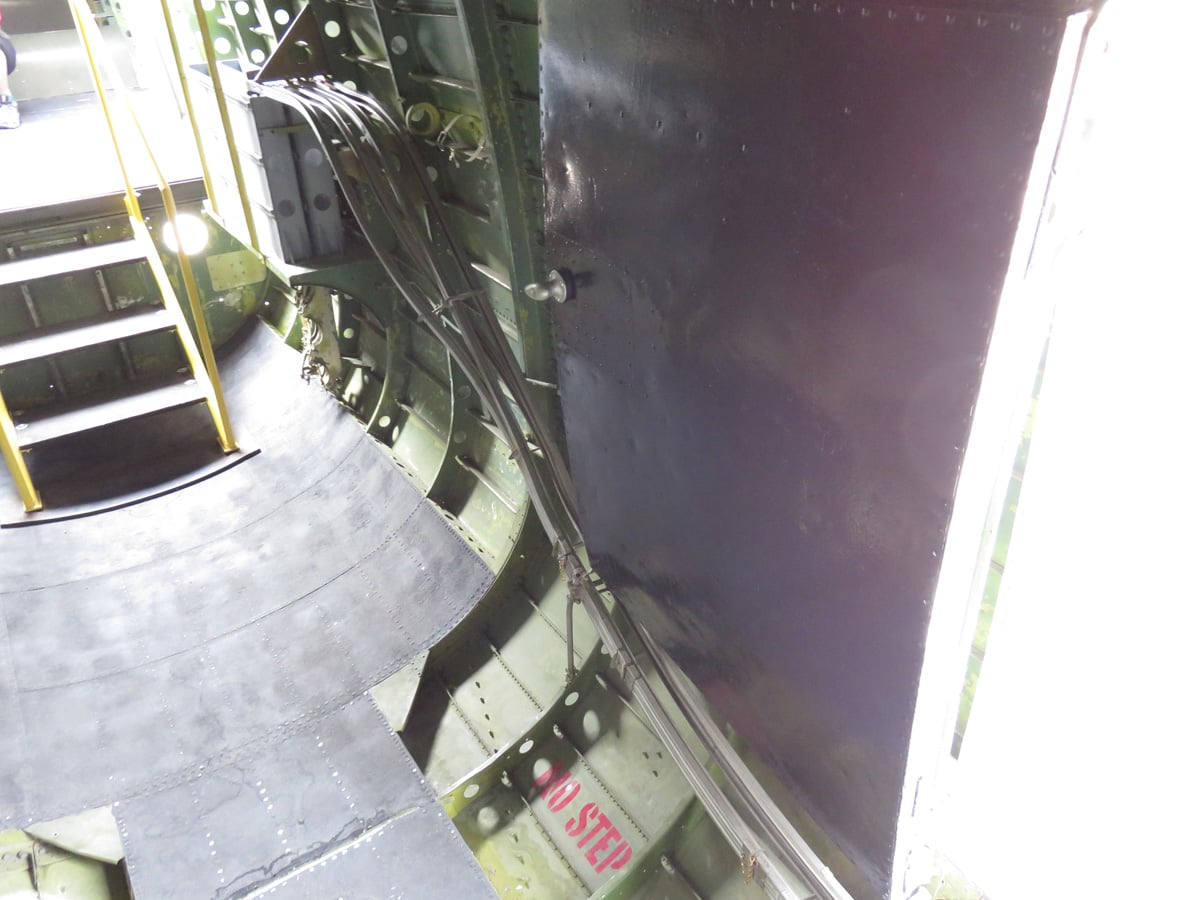
Standing just outside of the fuselage door are the rear turret ammunition boxes and the long rails that lead to the rear turret.
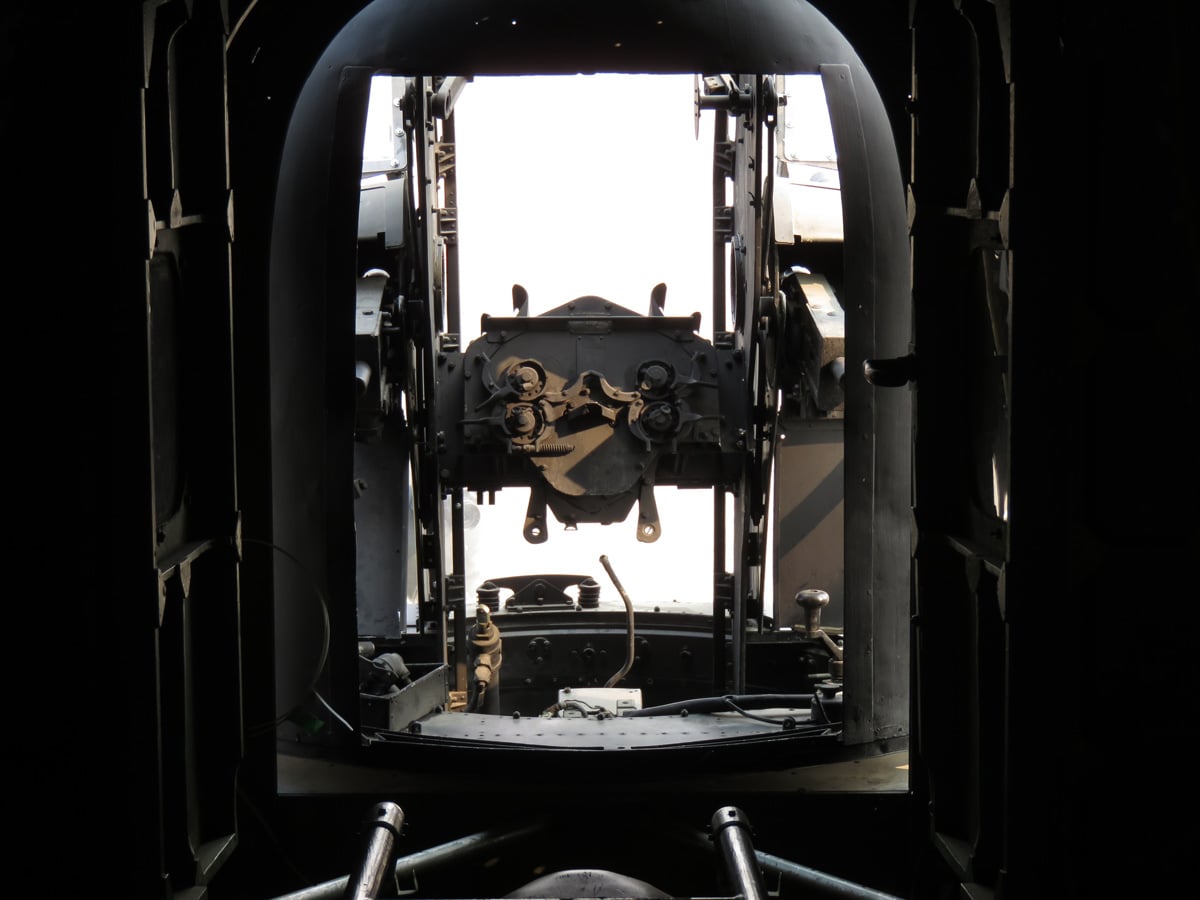
Looking through the rear turret. There are doors on either side that would close, keeping the gunner sealed in the turret. It wasn’t uncommon when a Lancaster was going down for the gunner to rotate the turret completely to either side, slide the doors open and simply lean back escaping the aircraft.
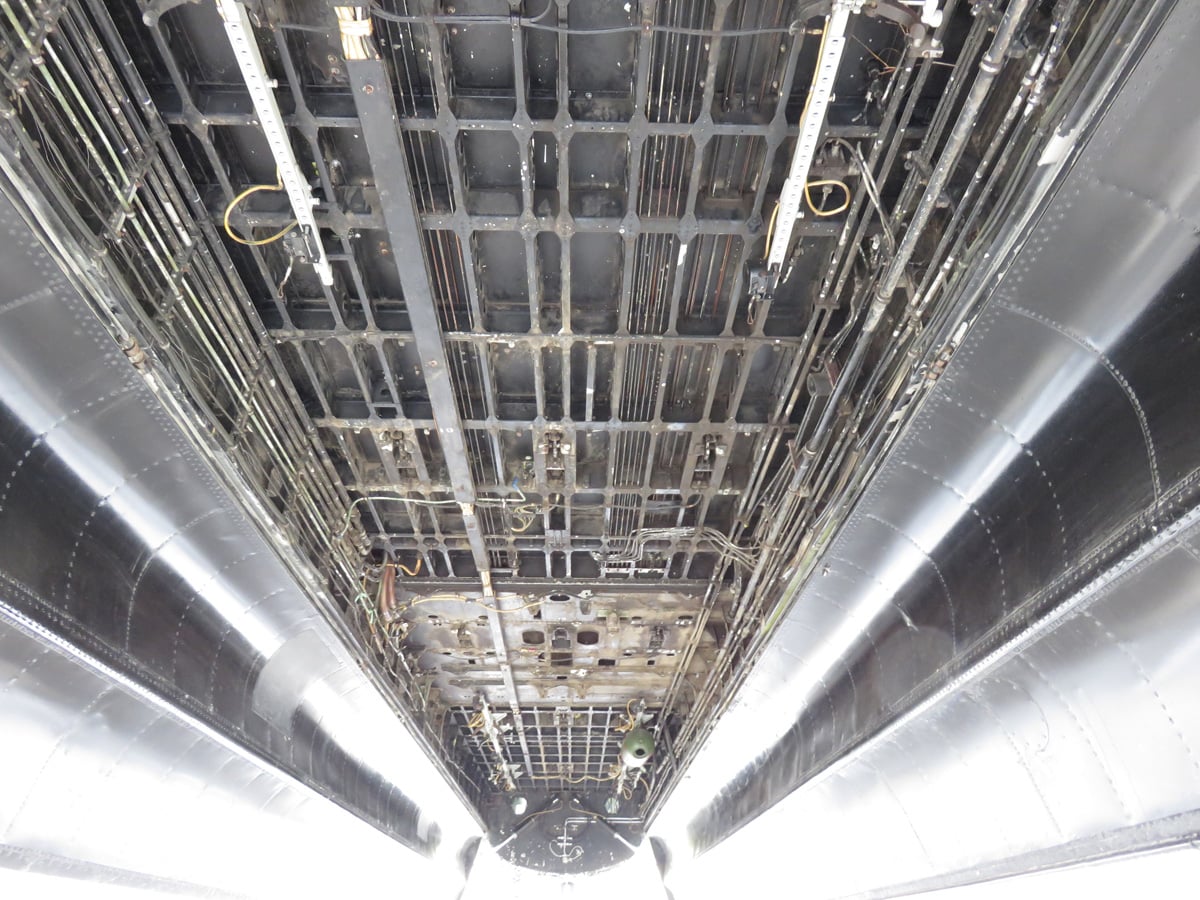
The Lancaster had one of the biggest bomb bays of the war. A unique feature was these long rails, which meant that the bomb racks could be removed and re-positioned depending on the mission ordnance.
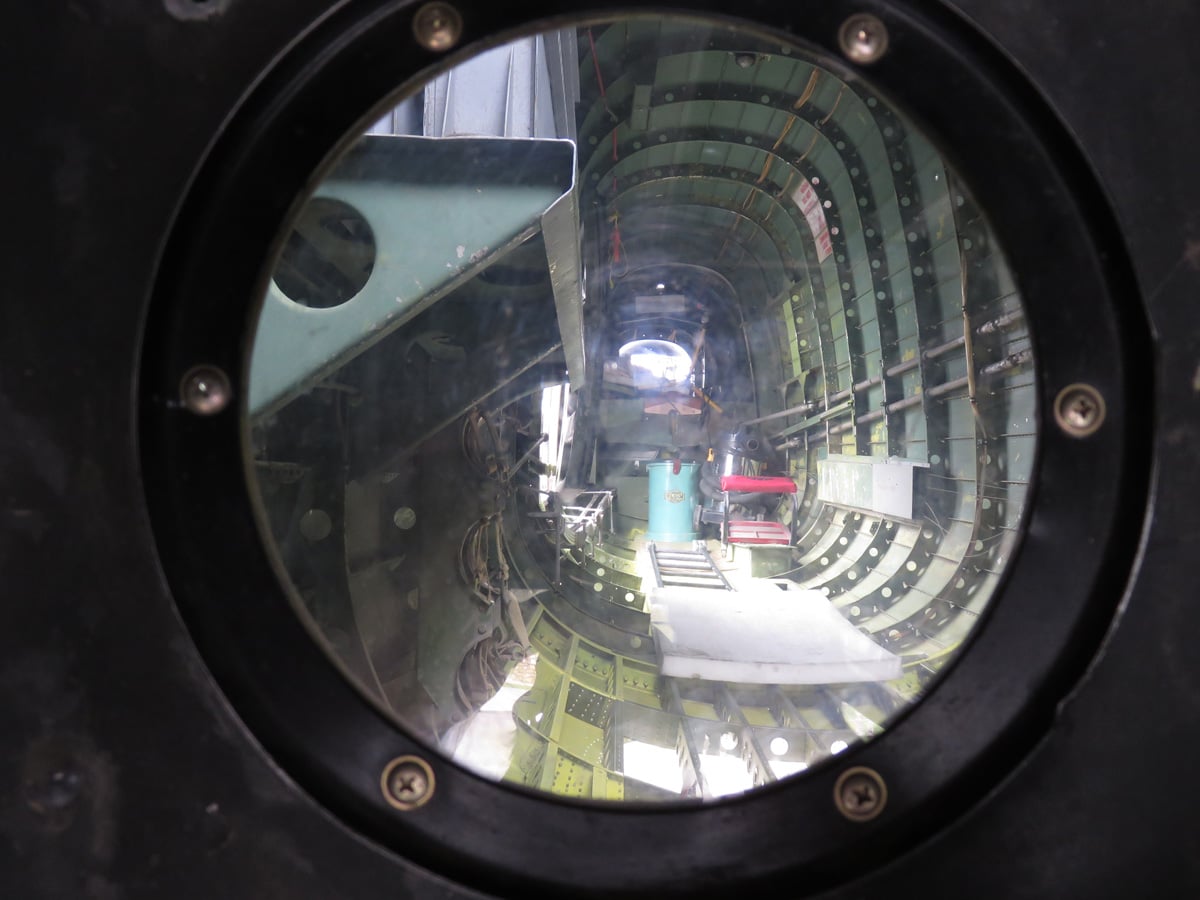
Looking through one of the bomb bay windows, you can see into the aft interior. Just above to the left are the ammunition boxes for the top turret, and the C-shaped objects just below are where the oxygen canisters were stored. Further back, the large teal cylinder is the toilet, which rests just before the rear wing spar.
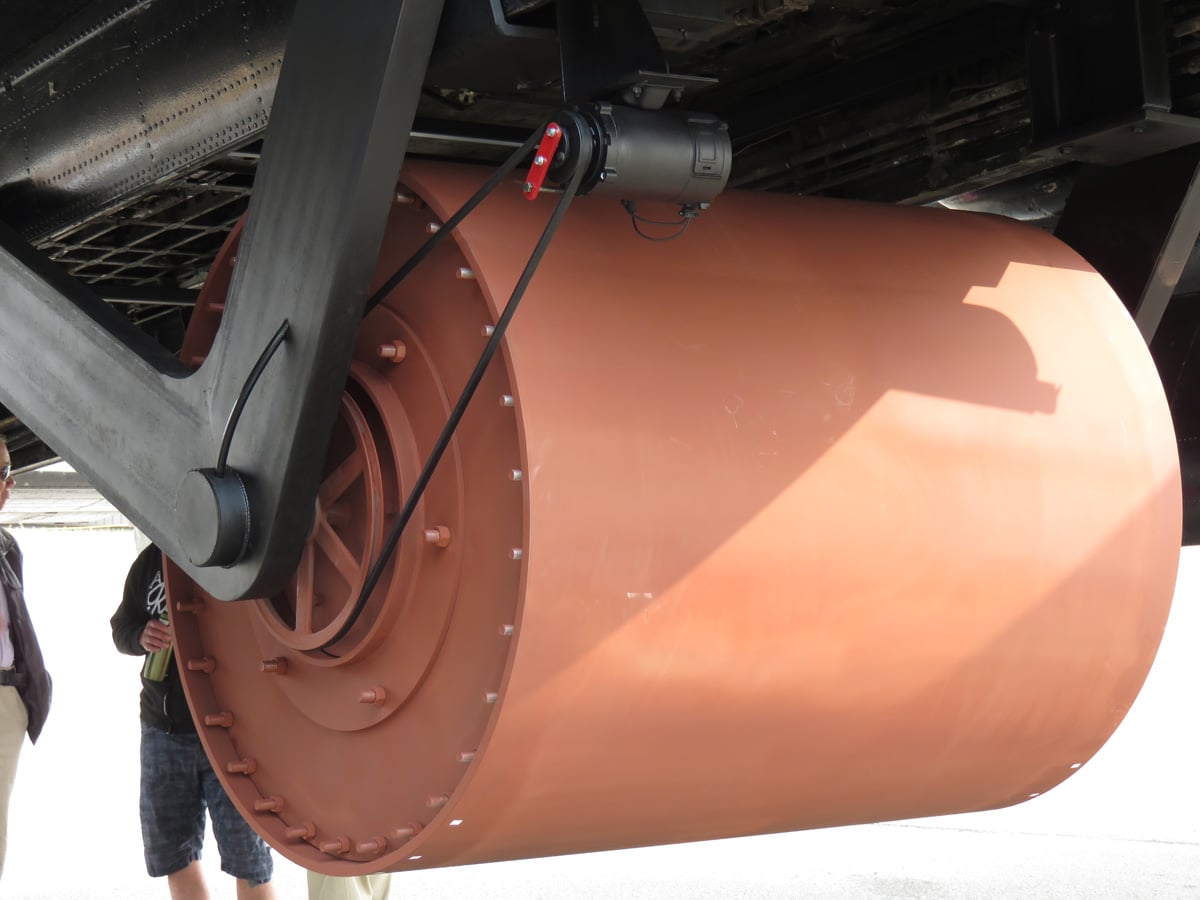
One of the shows I attended was the Dambusters anniversary. The Museum had removed the bomb bay doors and built a replica of a bouncing bomb used to destroy the dams. Above the bomb can be seen the motor which was used to spin the bombs.
According to the museum representatives, the bombs were painted a rusty color, this is according to German witnesses from the Operation Chastise attack. Though they admit the actual color is still a controversy among historians.
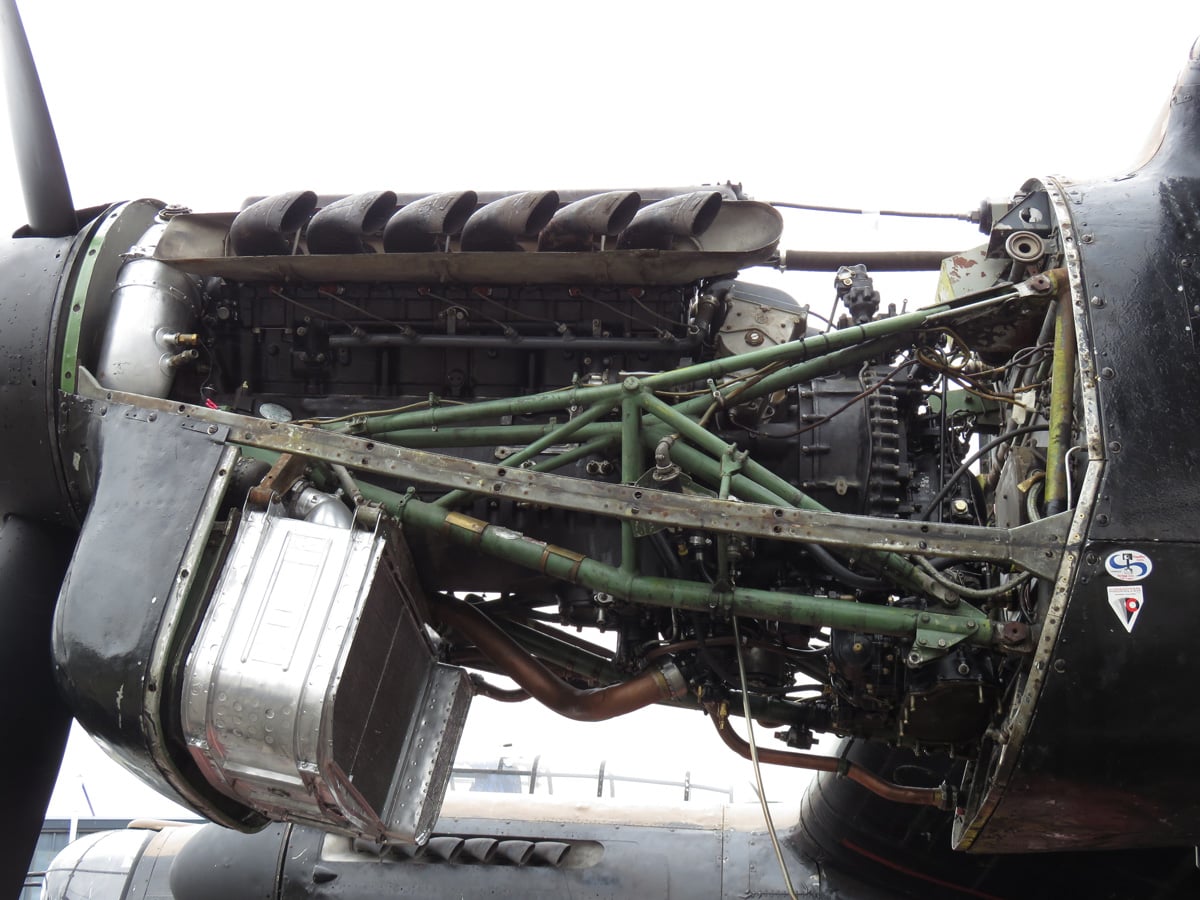
The infamous Merlin engine on full display. The dark green tubes are the engine mounts, and note that FM 159 has late-war style exhaust stacks, and not the longer, thinned exhausts common to nighttime bombers.
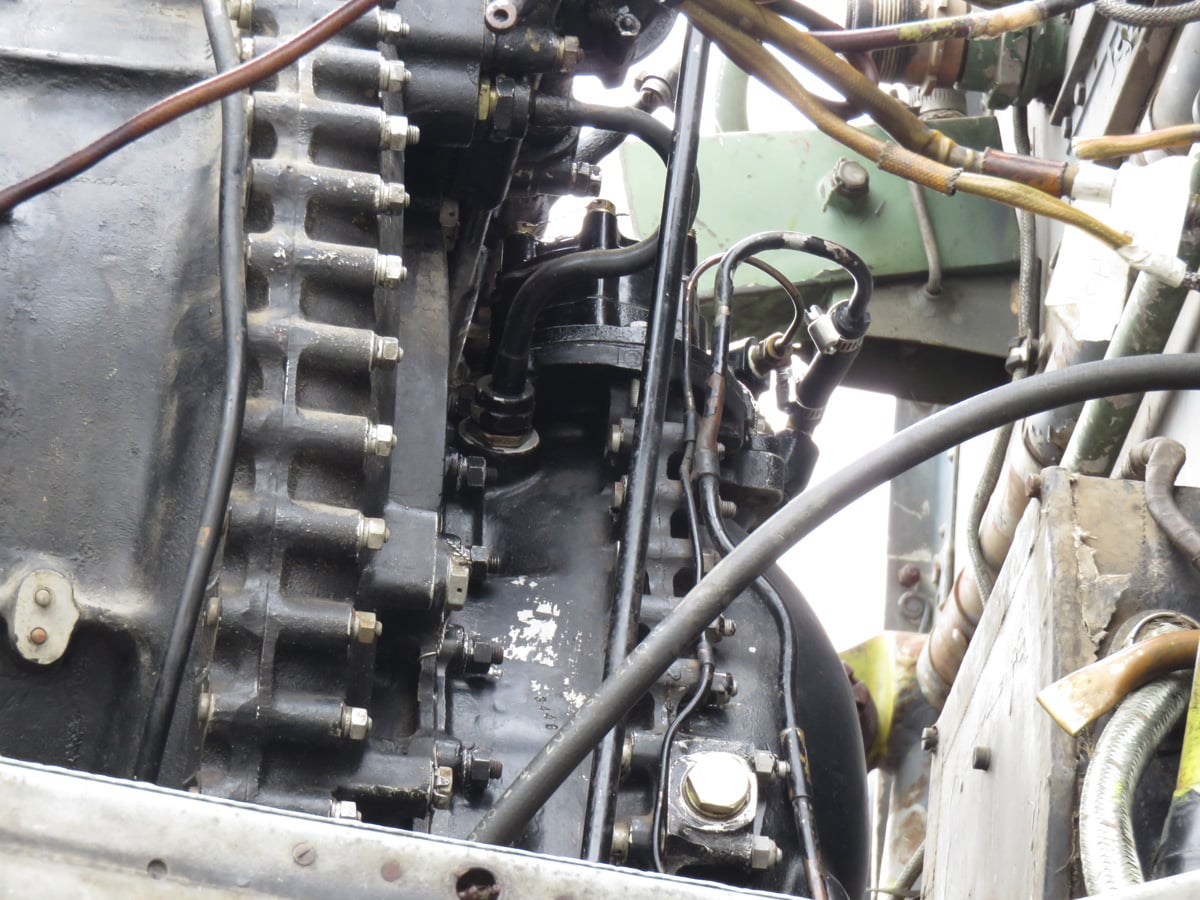
A closer look at the Merlin’s supercharger and carburetor.
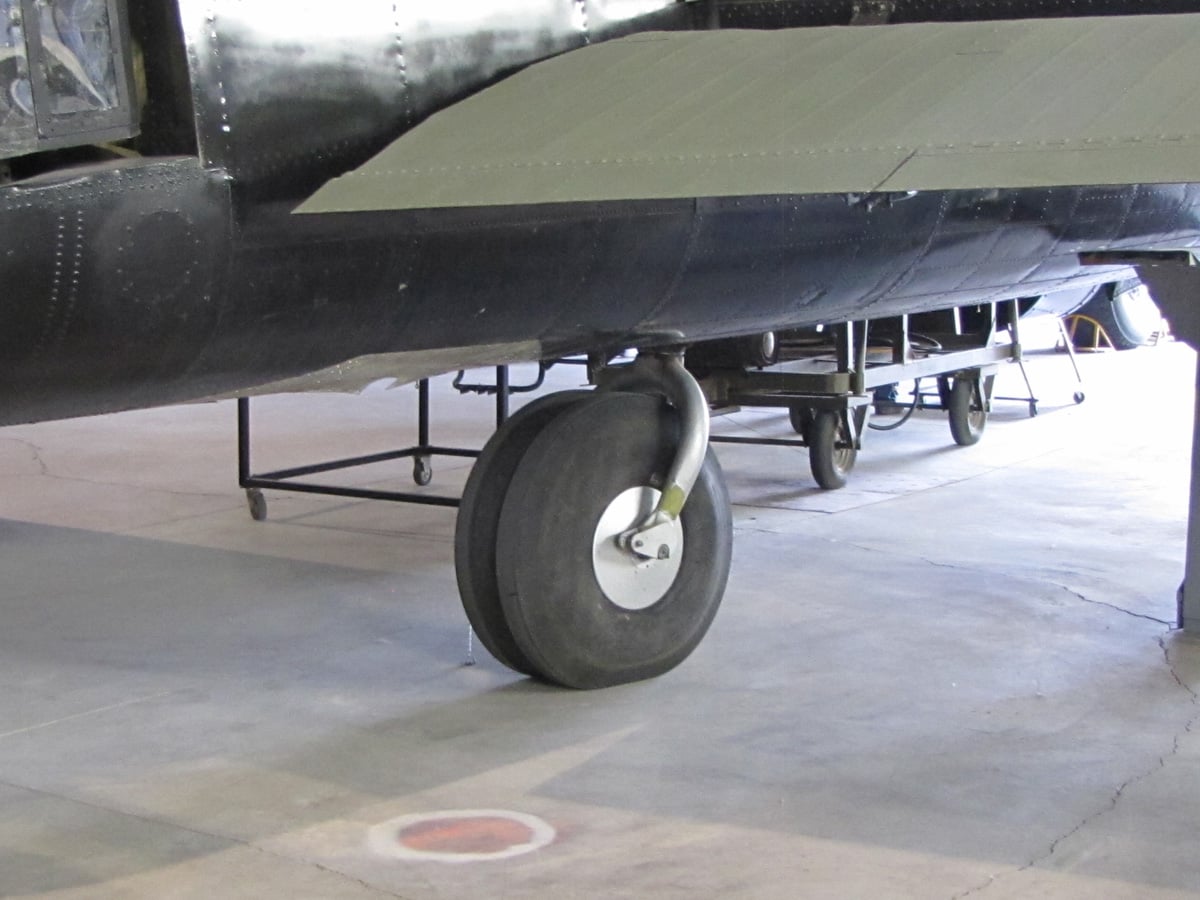
The tail wheel had a recessed center, and the raised sides were designed to improve the stability of the bomber while it taxied.
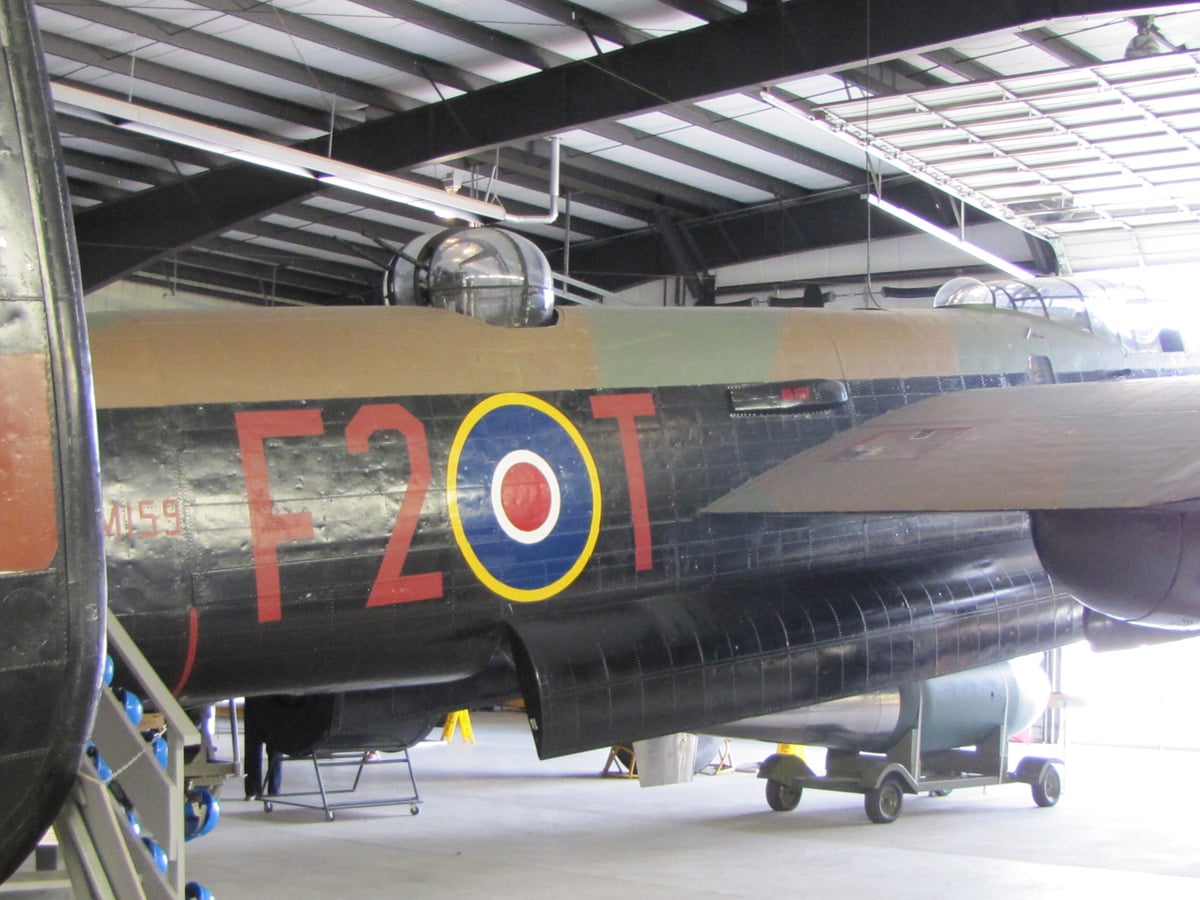
A better look at the side of the bomber shows the top turret, and the placement of the heater intake.
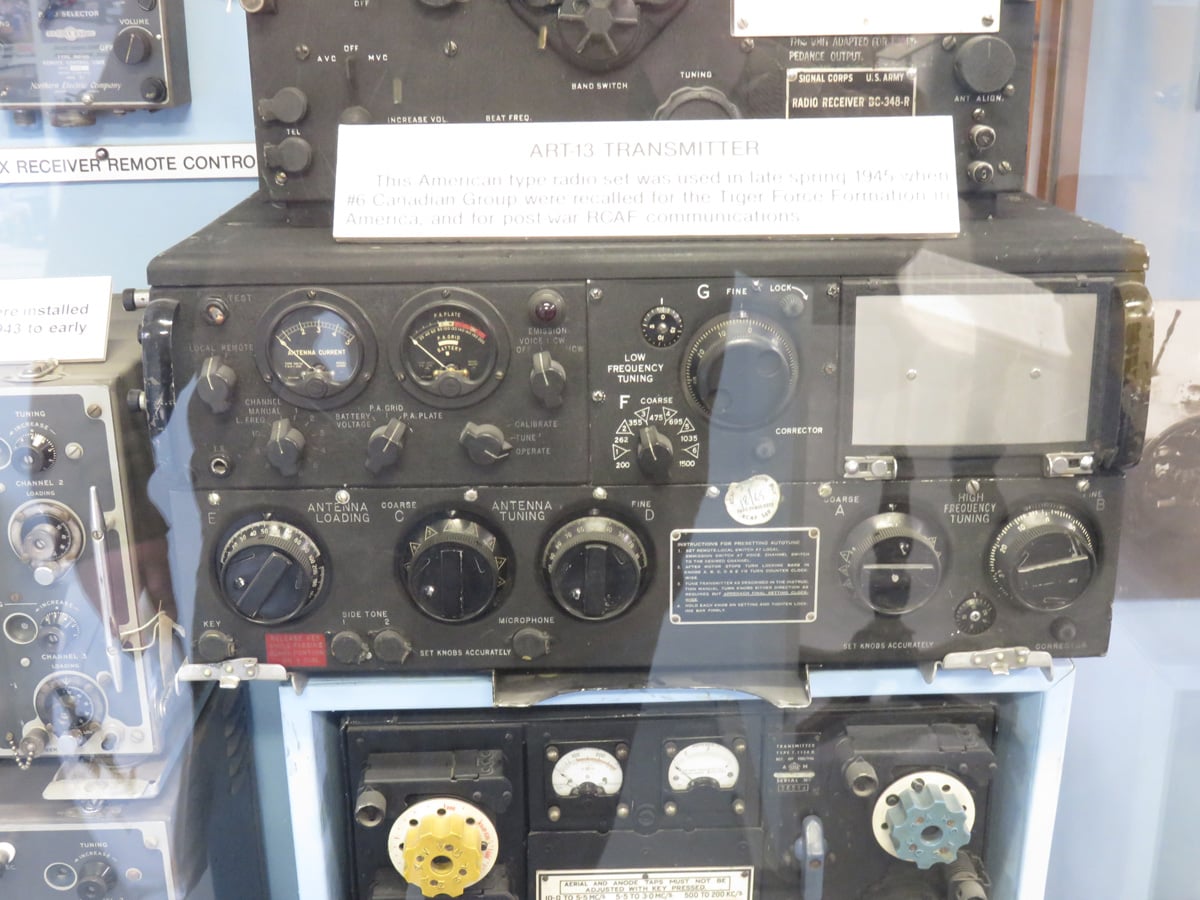
The Radio Operators ART-13 Collins transmitter unit. This is an American unit that was purchased exclusively for Canadian aircraft.
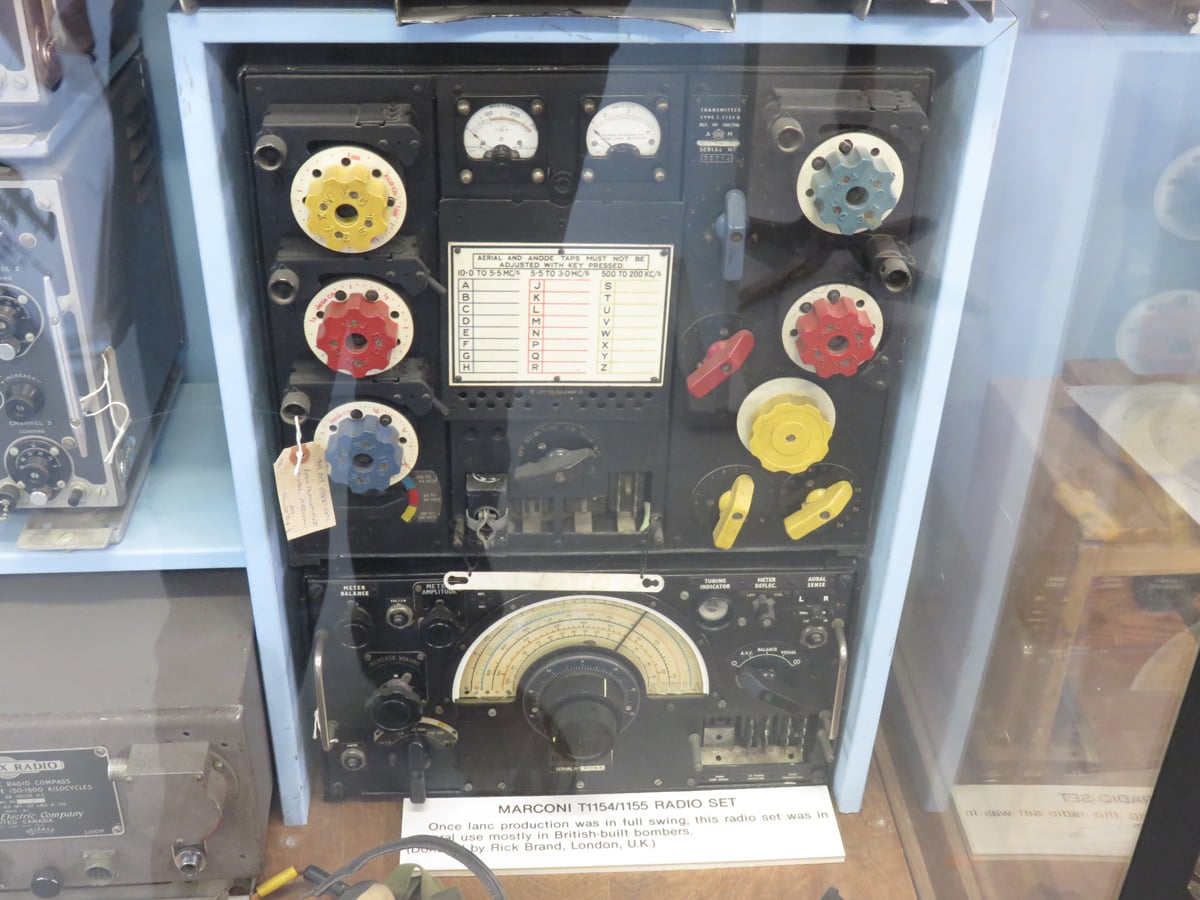
The Marconi T1154 Transmitter, with its iconic bright knobs and switches. This allowed for better viewing in the dark. Just below is the AR1155 Receiver Unit.
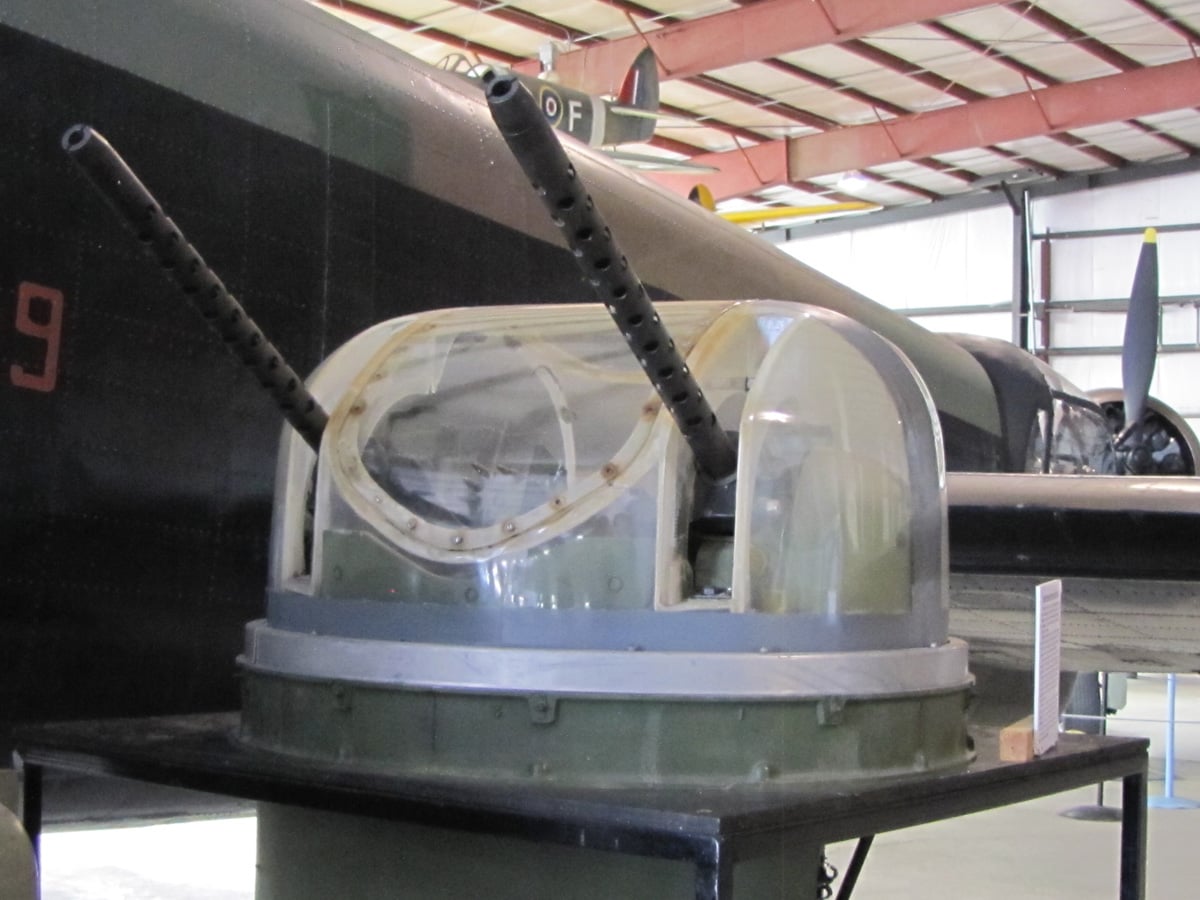
A Martin CE250 gun turret. These were American-built turrets, commonly found on bombers such as the B-24 Liberator. The turret housed two 50.cal Browning machine guns, and many were refitted to Canadian-built Lancasters. This turret can be seen used on the Hamilton Lancaster, one of 2 complete airworthy Lancasters.
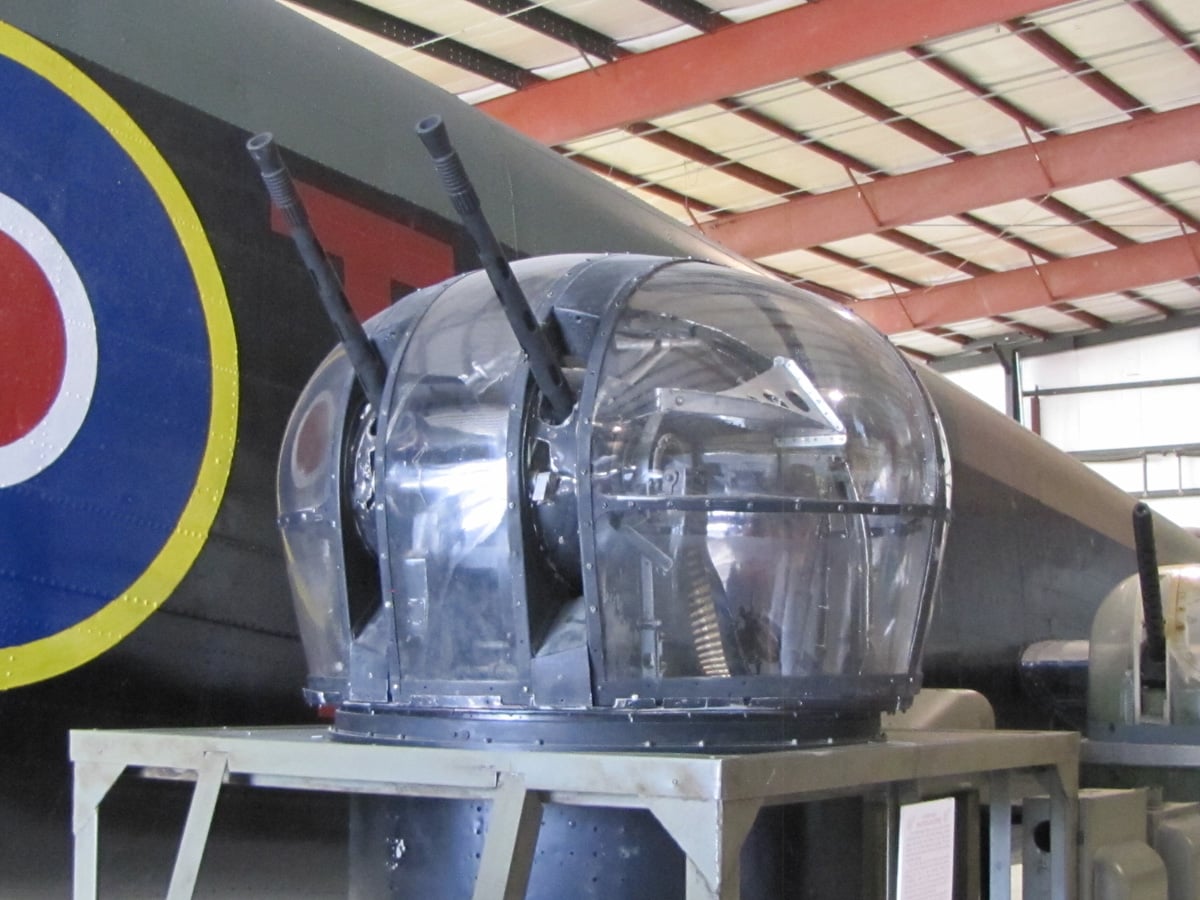
More commonly seen on Lancasters is the Frazer-Nash Turret. Unlike the Martin turret, the Frazer-Nash turret housed two 303.cal Browning Machine guns. Though a smaller calibre, the 303 had a faster rate of fire.
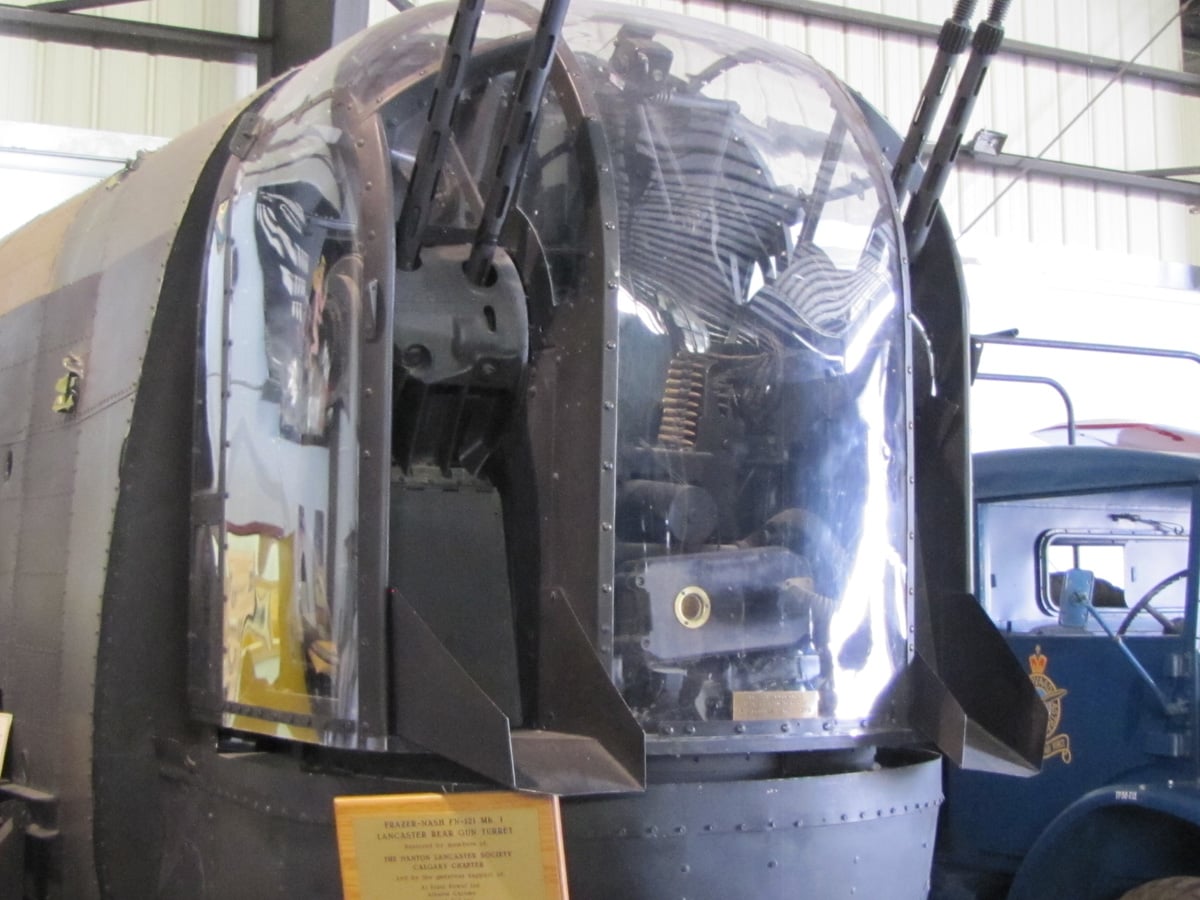
The rear gun turret, also built by Frazer-Nash, held four 303 Machine guns and had a great range of motion to protect the aircraft. The trays below the machine guns allowed the spent ammunition casings to fall away from the aircraft.
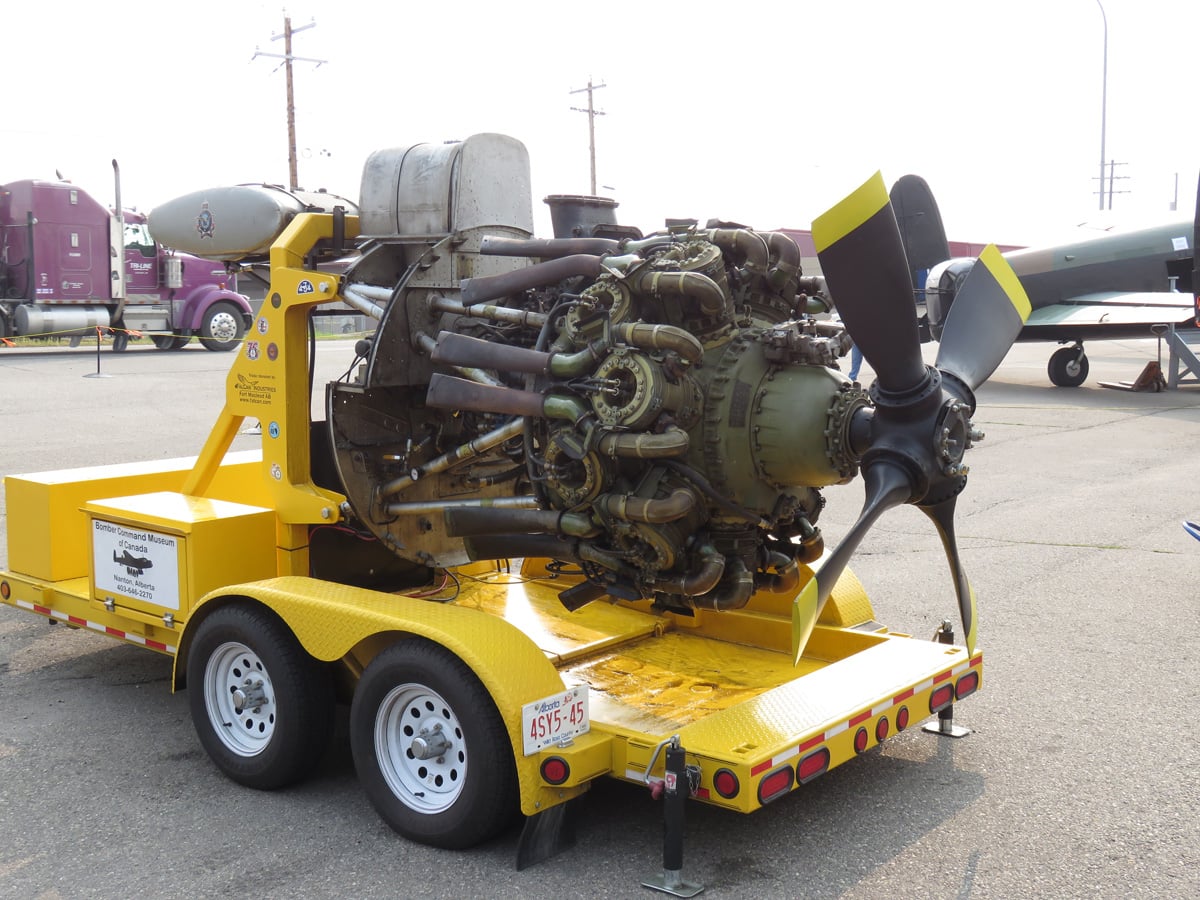
On this mount is a Bristol Hercules Engine. These were commonly seen on aircraft like the Handley-Page Halifax, Bristol Beaufighter, and Shorts Stirling. But for a time, Merlin engines were in short supply, so the Lancaster Mk.II’s were refitted with four Hercules engines.
This one engine makes one racket and is louder than all four of the Merlin engines.
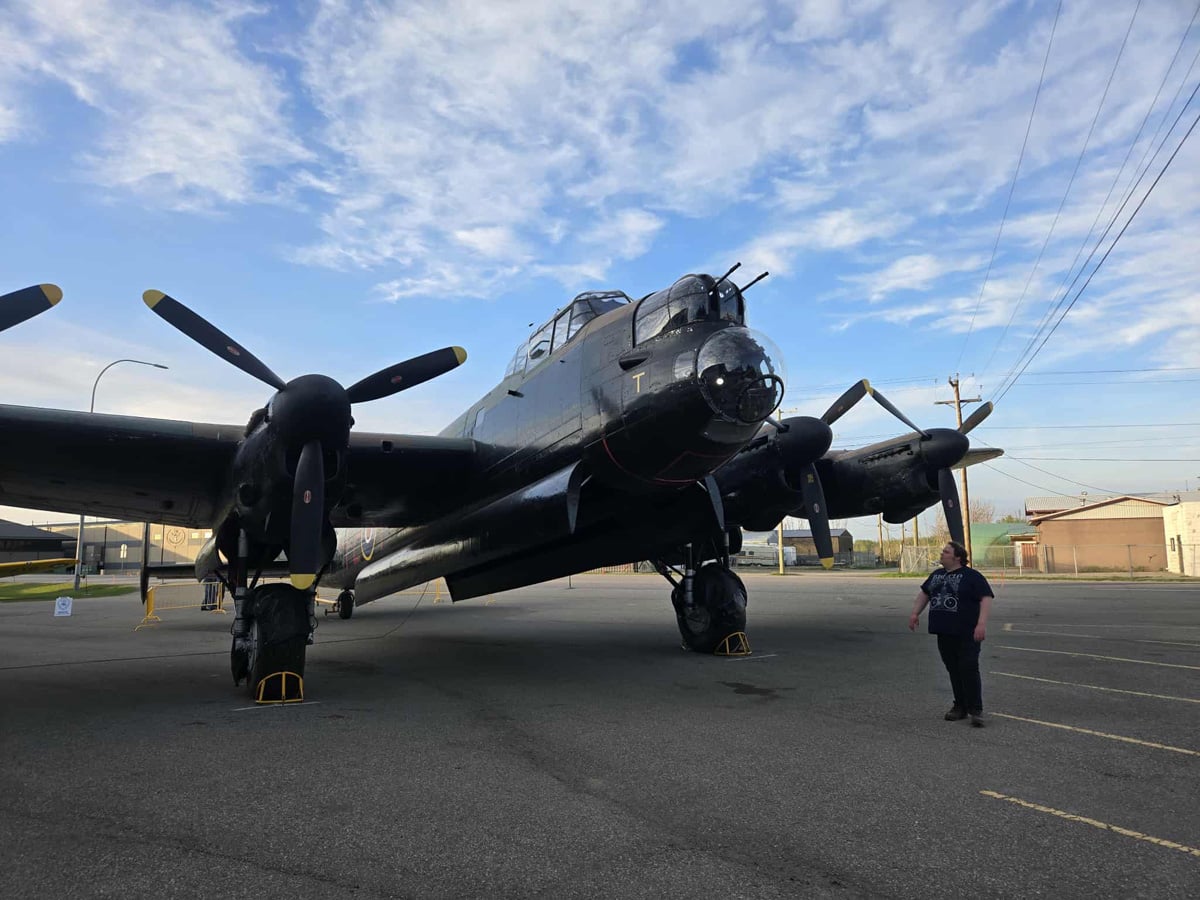
FM 159 is a special Lancaster. Though not a war-used aircraft, she’s had a long service life, and that continues with the volunteers at Bomber Command in Nanton. If you are ever in the area, it’s worth a visit as the museum features many more Canadian aircraft. They are currently working to restore a DeHavilland Mosquito and undertaking a new mega project of rebuilding a Handley-Page Halifax. I look forward to the day when both of these magnificent bombers will be running.
About the Author:
Jared Demes is a modeler from southern Alberta. He has been building models since he was 4 years old when his Dad first introduced him to the hobby. He has written for several magazines including, Fine Scale Modeler, Scale Aircraft Modeling, Phoenix Scale Models, and others. He has an interest in all modeling subjects, with a focus on WWII Japanese aircraft and Science Fiction.
Jared has won several IPMS awards for his modeling, and currently operates his YouTube channel rebelsatcloudnine, where he showcases model builds and product demonstrations.
Lancaster Build Completed Images: Part 8
Lancaster Build First Post: Part 1