

The Basics
Washes/shades (the name depends on the brand mostly, they are the same) are a core part of the miniature painting hobby! Whenever you paint a model, even if the paint has been thinned down, covers built in details on the model. Without an application of washes, a model kit may end up looking dull, boring, flat and lifeless!
It’s the equivalent to turning the shadows on in a video game vs leaving it off. Leaving it off leads to better performance (painting equivalent of finishing the painting faster) but leaves your game looking much worse off.
Why Enamel washes vs water based acrylic washes?
Simply put, enamel washes are just better! The biggest issue with acrylic washes is their drying time, or lack thereof! They dry too fast! A thin layer of acrylic wash could dry in about 5 minutes, maybe even less depending on room temperature and the amount placed! You might think that this is a good thing but it isn’t because it leads to uneven drying! Uneven drying leads to a messier, chalky paint job!
When using washes, gravity is your biggest enemy as pooling occurs! Pooling is when gravity pulls down paints (especially the overly thin ones like washes) down to the bottom part of a miniature! The most common places pooling can occur is around or in the tracks of a tank or the shoes/boots/feet of a miniature. You might think that when this occurs that it’s an easy fix. It can be but only for a limited amount of time.
Past the first minute, pooling cleanup for acrylics can cause something called “coffee staining”. Your miniature
Let’s meet the “cast”:
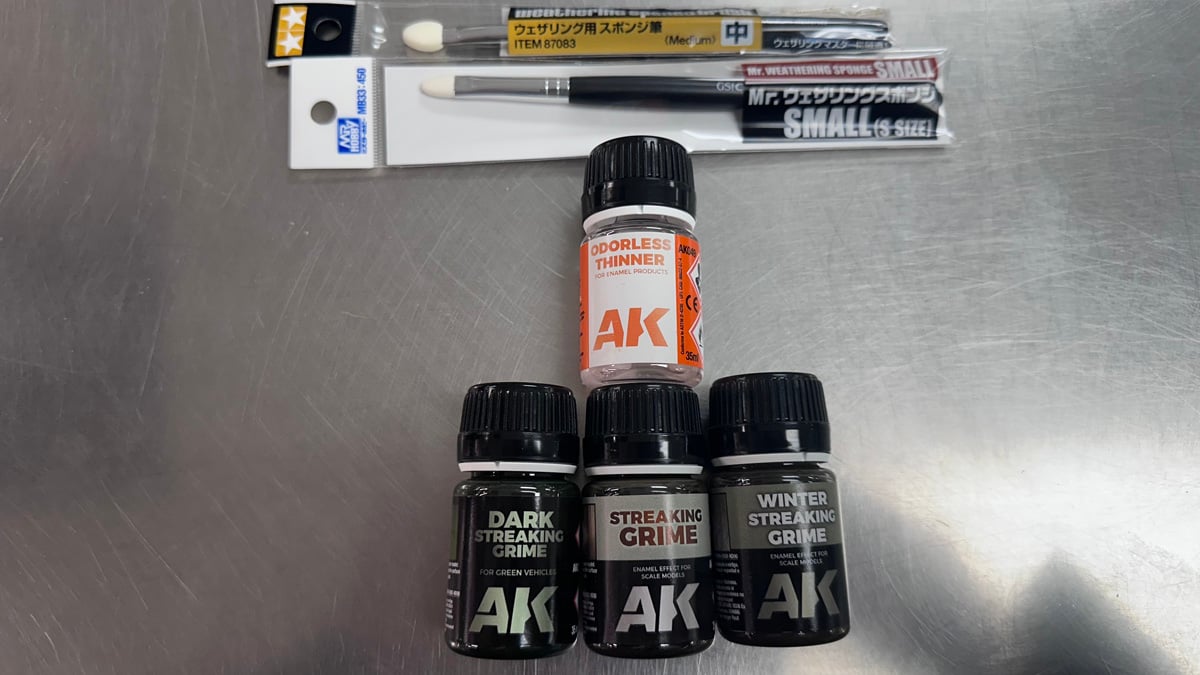
Pictured above are the main tools and washes that one typically uses during this entire process! You don’t need all these washes, by the way. Pick your poison! Just one of the 3 shown, the odorless thinner and one of the sponge brushes! Each and every item shown from here on out, are all available through our website, sunwardhobbies.ca
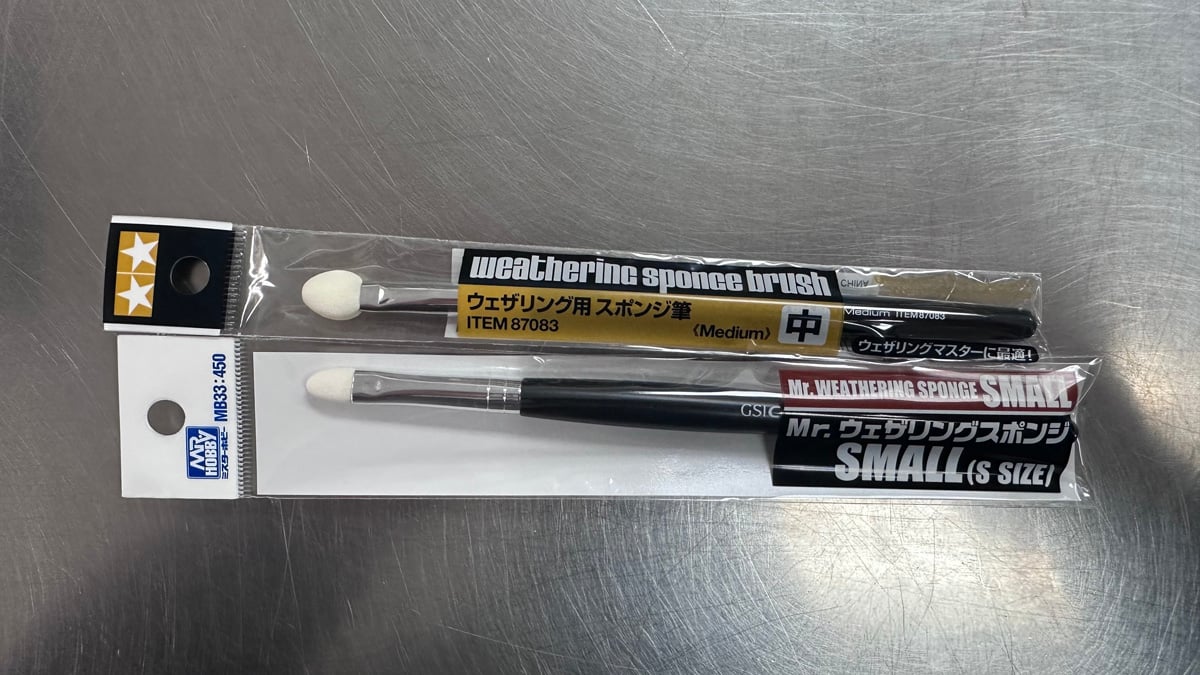
These weathering sponge brushes are from Tamiya and Mr Hobby respectively (top to bottom). It’s the Tamiya 87083 Weathering Sponge Brush and Mr Hobby MB32 Mr Weathering Sponge Big!
Pick one or the other! For a normal sized miniature – 1/72, 1/48, 28-40mm scale, just one sponge brush is enough!
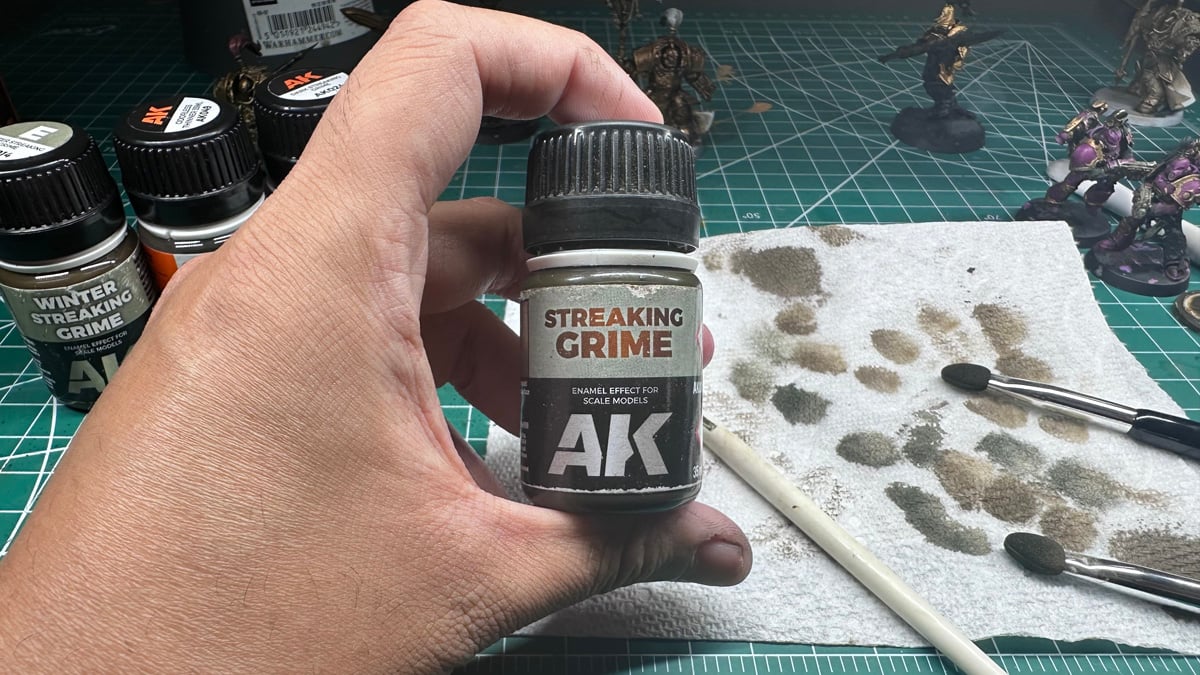
Ahh AK Interactive Streaking Grime AK012. The most popular enamel wash. It’s certainly the most ubiquitous (outside of the gundam community but we will get to this later) enamel wash! For those who use water based acrylics (Vallejo, Citadel, AK 3rd Generation, The Army Painter, etc), streaking grime could be compared to your Nuln Oils or Agrax Earthshades in ubiquity.
It’s a wash that has a dark brown, slightly greenish liquid that surprisingly goes well with everything! And people do apply it on everything! It’s why it’s almost always out of stock! No matter how much stock we bring back, people keep using it and coming back for more! Like that one hot sauce in the commercials! Francis’ or French’s red hot or whatever 🤣
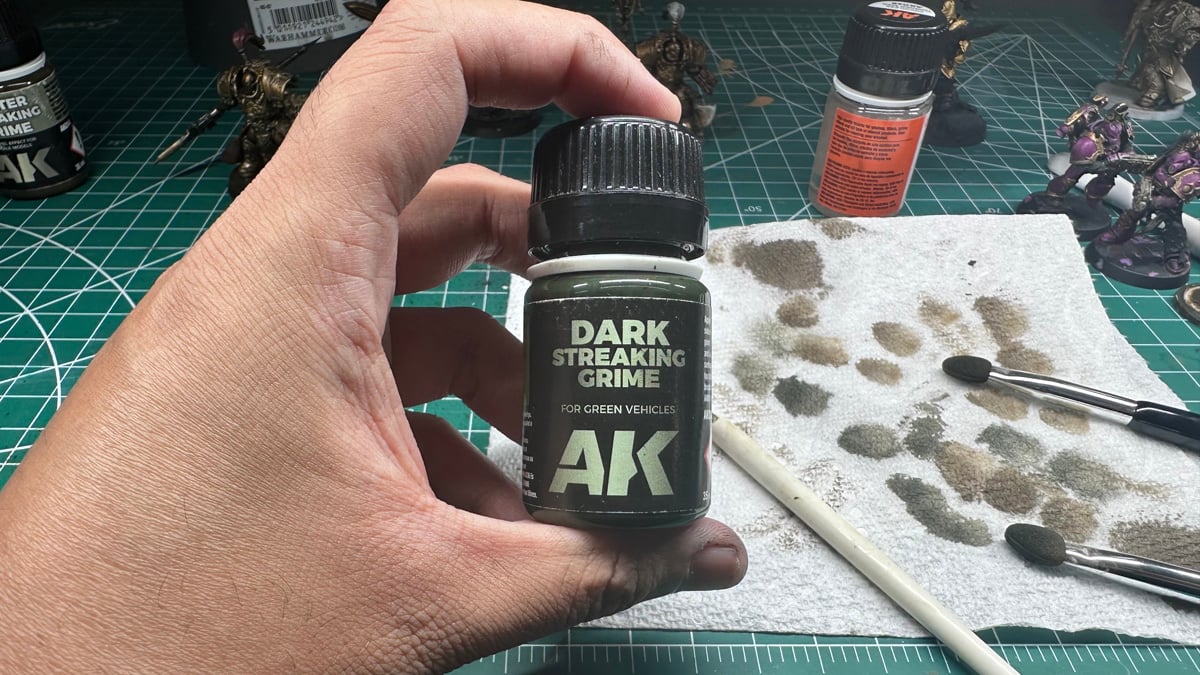
This is AK Interactive Streaking Grime but Darker AKI024! This one is my personal favorite! The Nuln Oil/Black wash comparisons are more apt here since this is a much deeper shade! It has a very deep greenish black hue with hits of brown! As such, dark streaking grime may actually be the better fit for more Grimdark Warhammer paint jobs as compared to the more brown streaking grime.
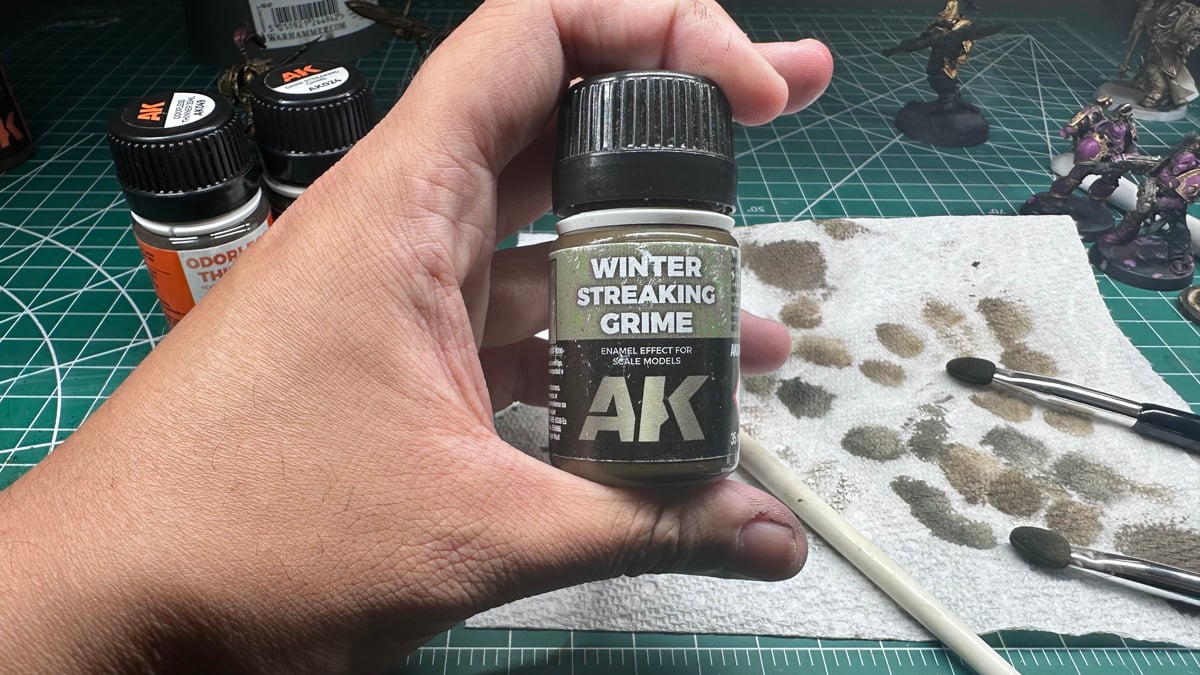
Winter Streaking grime is the lightest of the three streaking grime formulas! It’s meant to be used to emulate the grime and dirt that builds up on a surface during the winter months! A car/vehicle or any outside surface, during the winter, will end up caked with a mix of salt residue, frozen water streaks, and mud! It’s the perfect wash to use on any winter vehicle dioramas!
The Application Process
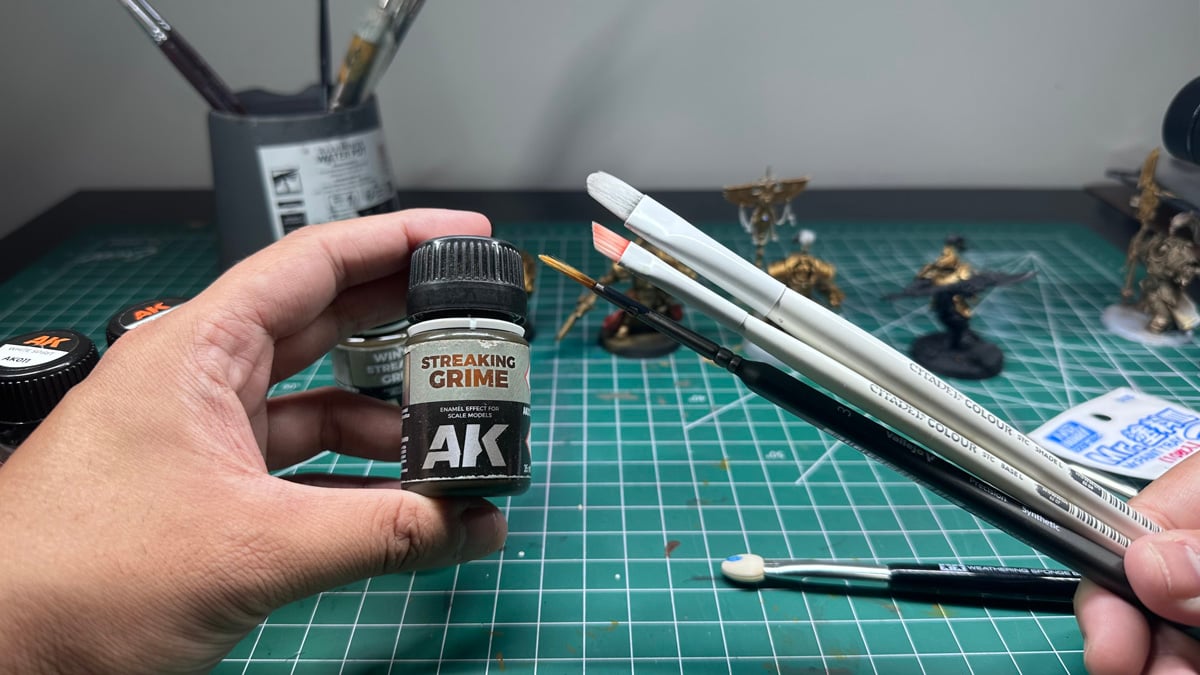
Regardless of which streaking grime you use, the process remains the same! Grab your choice wash and a brush that’s most appropriate for the size of the surface you’ll be applying the wash on.
The brushes in the image above is the #3 precision brush by Vallejo, the synthetic large base brush by Warhammer Colour paints (formerly known as Citadel paints), and the synthetic large shade brush by Warhammer paints as well! All three are available now at sunwardhobbies.ca
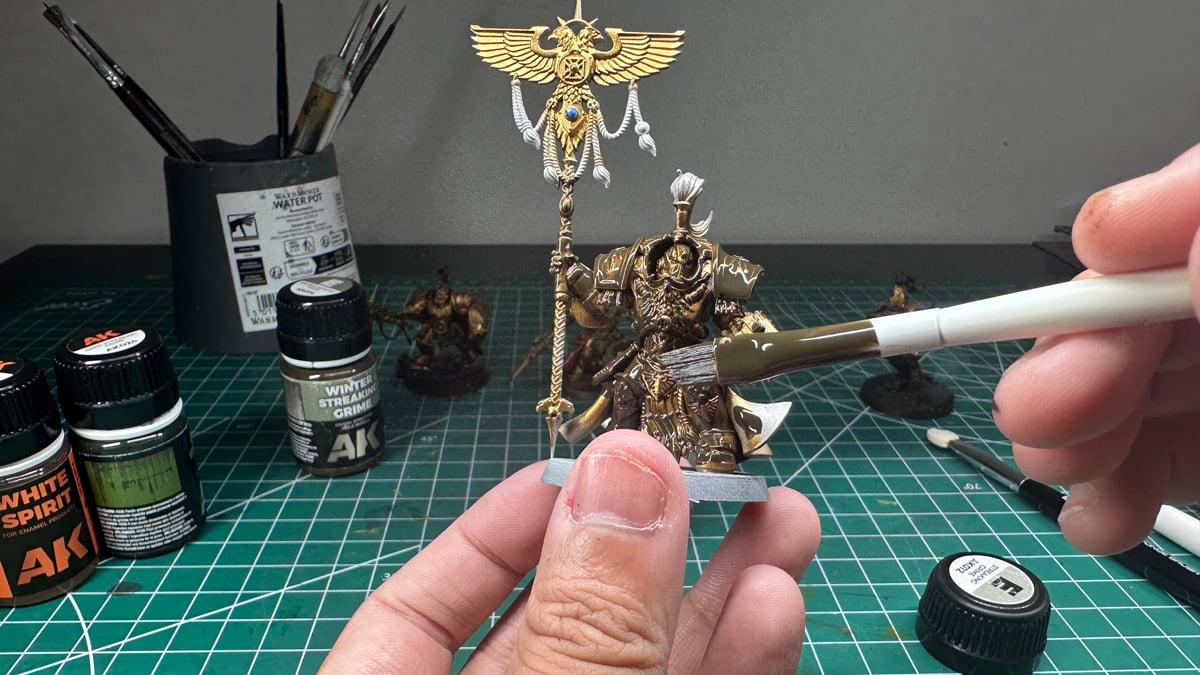
Brush on the wash onto the miniature! I’m applying just normal streaking grime onto the allarus custodian (from the Adeptus custodes combat patrol box).
Depending on the size of the surface, you may want to hold off on applying a wash on the whole thing all at once! A big miniature is too large and expensive to rush! Take your time on larger miniatures and apply the wash, section by section! You’ll see this in action when I publish part 2 of my Warmaster Titan build! Part 1 is now up, if you’re interested in seeing the review!
When it’s a small miniature, like the Allarus Custodian in the image above, feel free to apply it all over! There should be very little pressure on you since the real estate is small, and enamels dry very slowly, which gives us a lot more playtime!
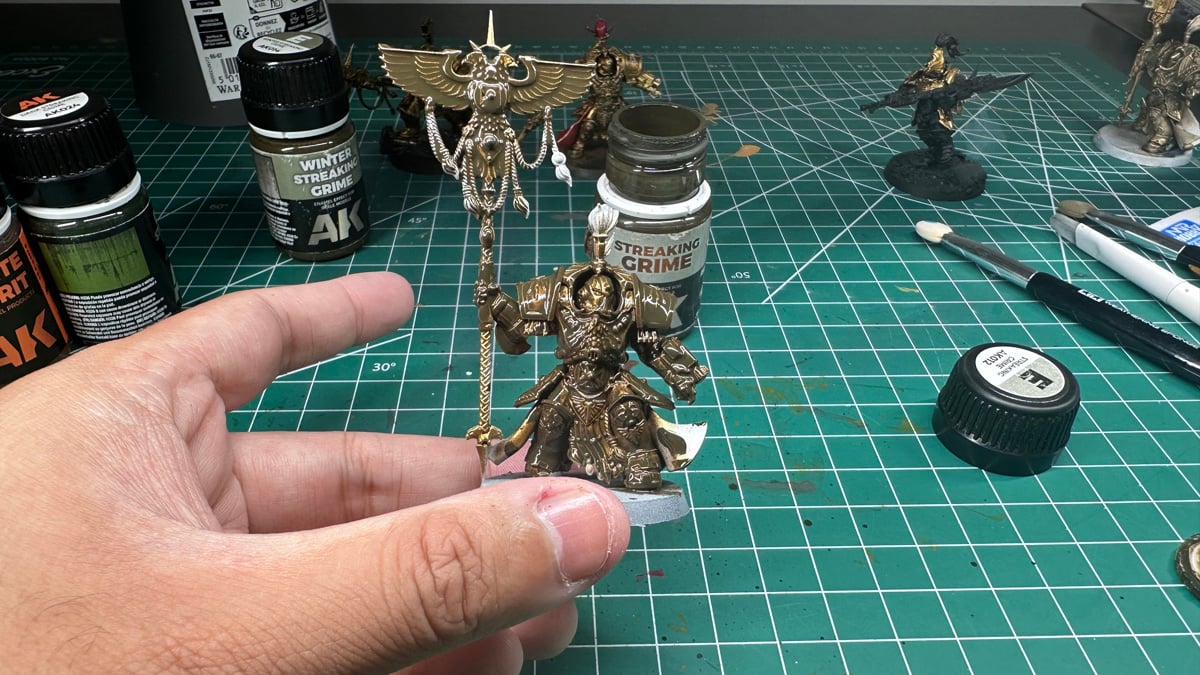
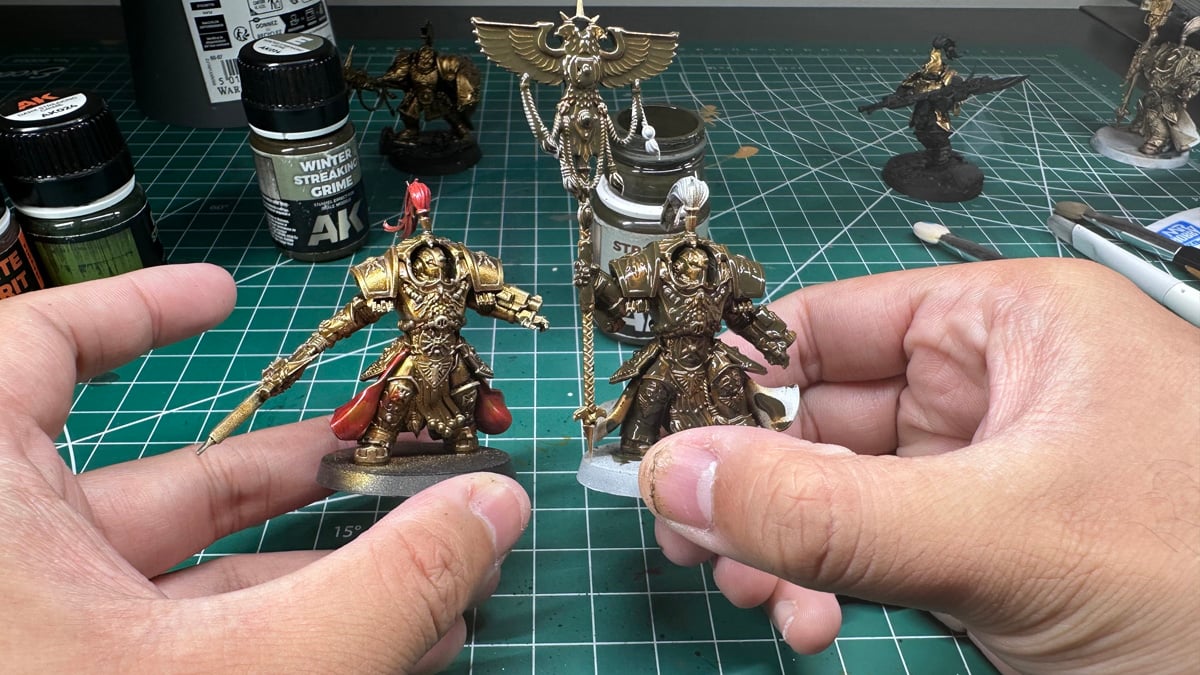
Here’s how the miniature looks like, covered in streaking grime! Let us sit on the miniature for 5-10 minutes! Enamel washes have such a long drying time, that it’s more than ok to do this! The short soaking period intensifies the intended weathering effect!
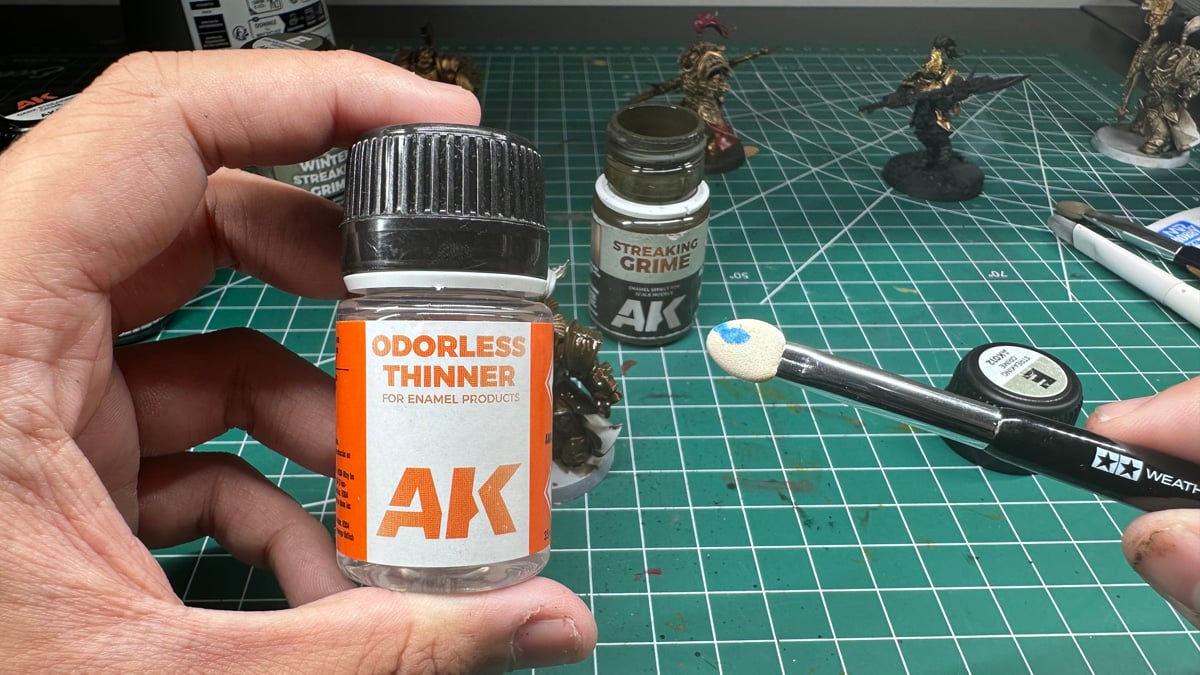
The next step is to remove the excess enamel wash on the miniature so as to not clog up the details of the plastic! The way to do this is to grab a sponge brush, like the ones from the beginning of the article!
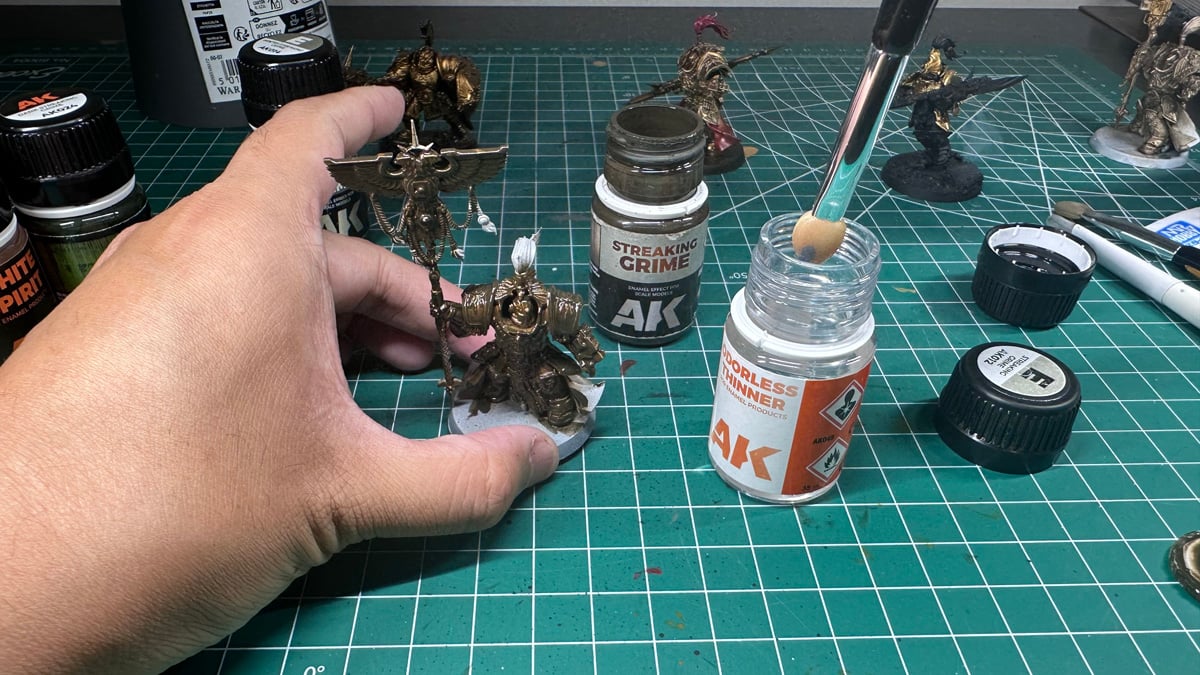
Make sure that the sponge brush is fully soaked in the odorless thinner. Yes, you can use mineral spirits in its place, though there is a catch to mineral spirits! Odorless thinners are “watered down” mineral spirits and aren’t nearly as harmful to the paints and to you! Odorless enamel thinners are a lot “gentler”. They virtually have zero fumes to speak of! I can’t say the same regarding of the shelf enamel thinners or mineral spirits. Be careful!
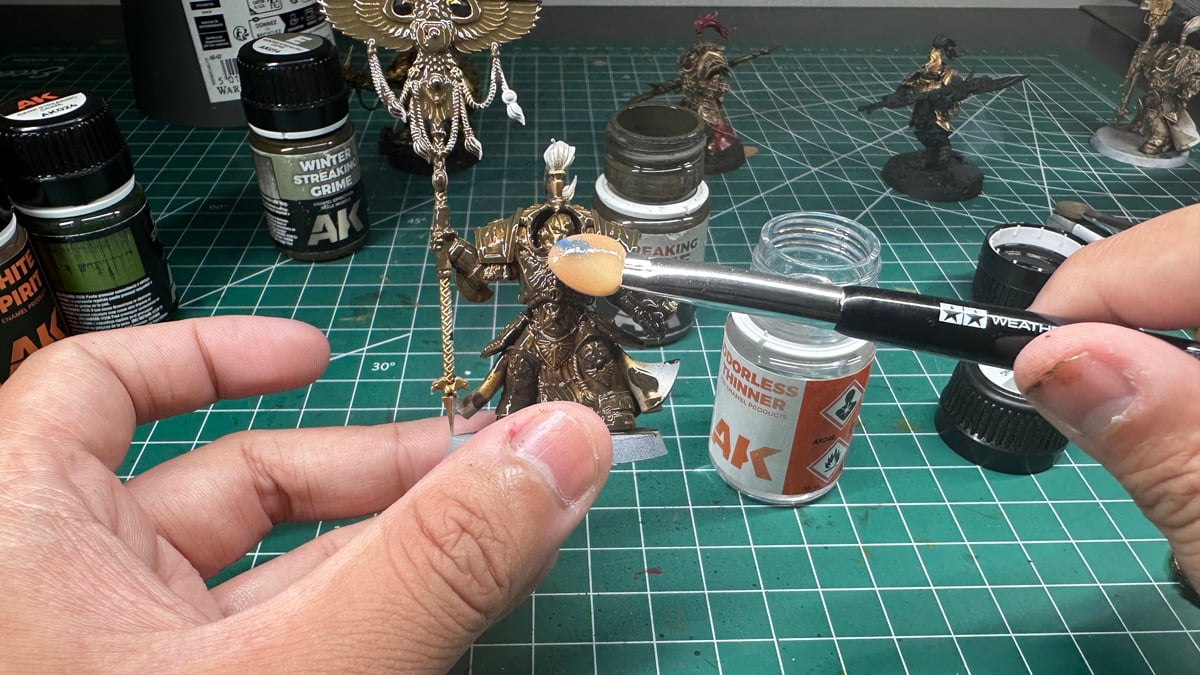
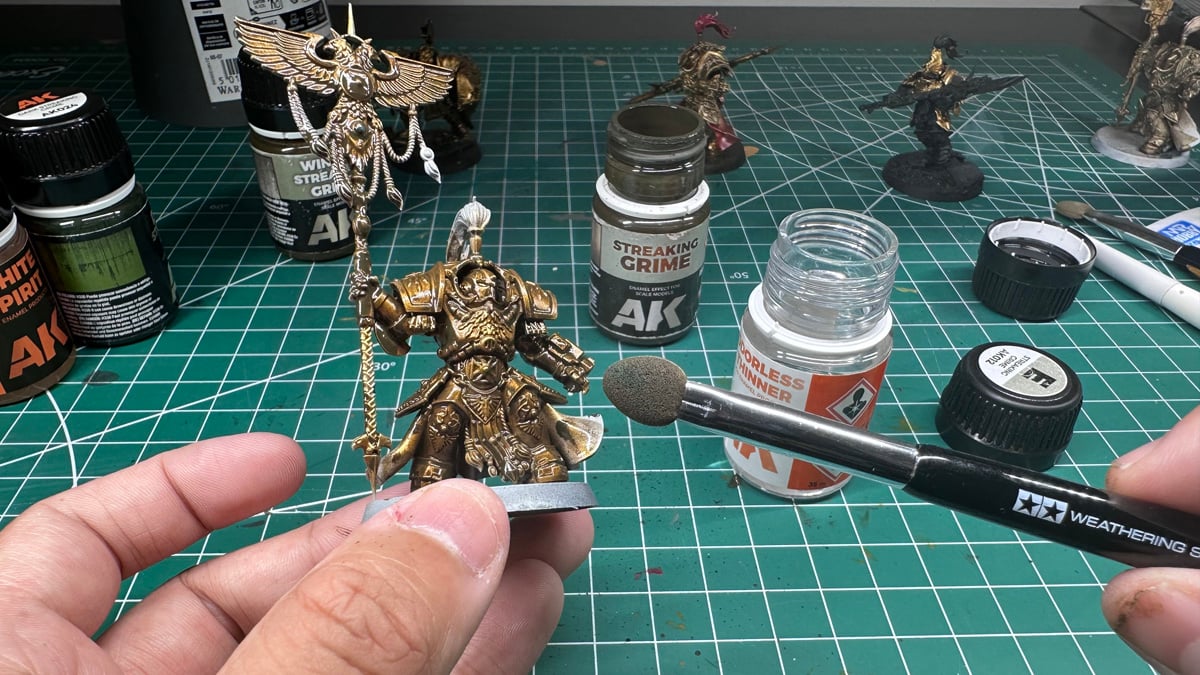
Once the brush is fully soaked, just lightly dab the sponge brush onto the surface with excess enamel wash! By lightly tapping/dabbing onto the surface, the sponge brush absorbs the excess enamel wash on the surface while retaining the wash effect in the crevices, panel lines and in between the plastic details! Just keep dabbing most of the wash off or until you’re satisfied with the effect.
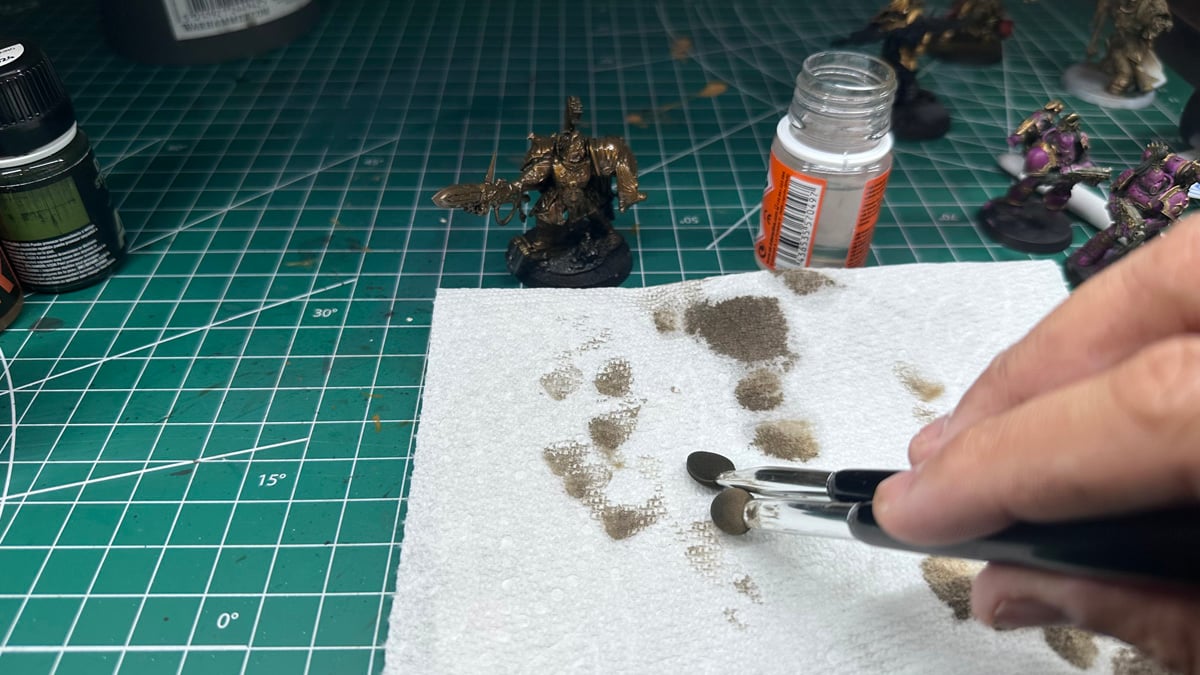
The sponge brush is now fully soaked in excess streaking grime! To clean off the excess from the brush, just grab paper towel and dab the sponge brush on it! Assuming that you’re doing this while the brush is still wet, the paper towel sheet will absorb most of the excess! Keep drying till the paper towel sheet stops absorbing! You’ll see it because of the dark wash seeping into the paper towel sheet. Even though the brush is still dark, just dip the brush onto the odorless thinner and start the process of removing the excess wash from the miniature again!
Why dab the excess off and not brush it off?
The reason for dabbing/tapping off the excess is because the vast majority of Warhammer painters use water based acrylic paints (Vallejo, Warhammer paints, The army painter, two thin coats, AK 3rd generation, etc) and these water based acrylics are the weakest paints in terms of durability! Even with a primer undercoat, anything strong can melt, crack, bubble and/or peel water based acrylics! So with that in mind, we reduce the risk of the paints sloughing off the miniature by just lightly tapping the sponge brush on the surface!
It’s also why we dip the sponge brush in the odorless thinner BEFORE we dab the excess wash off. It’s to “soften” and “water down” the enamel wash before tapping the miniature! It’s to further prevent any paint damage whilst giving the softened airbrush look that this entire effect is known for!
How much you remove will completely depend on the effect you’re going for! A “battle ready”miniature will have some dirty and grim but it’s weathering will pale in comparison to a proper Grimdark grimey paintjob! All up to you!
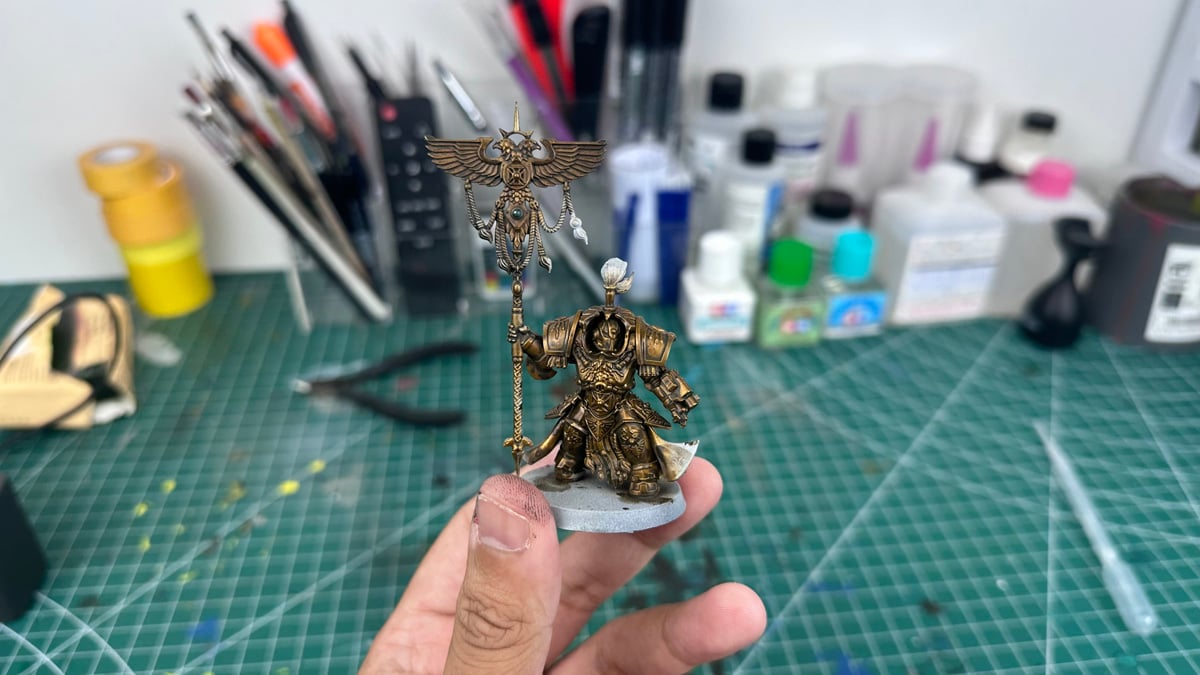
The end result! That’s with the vast majority of the wash removed as well! You can leave a bit more on the miniature for a stronger effect!
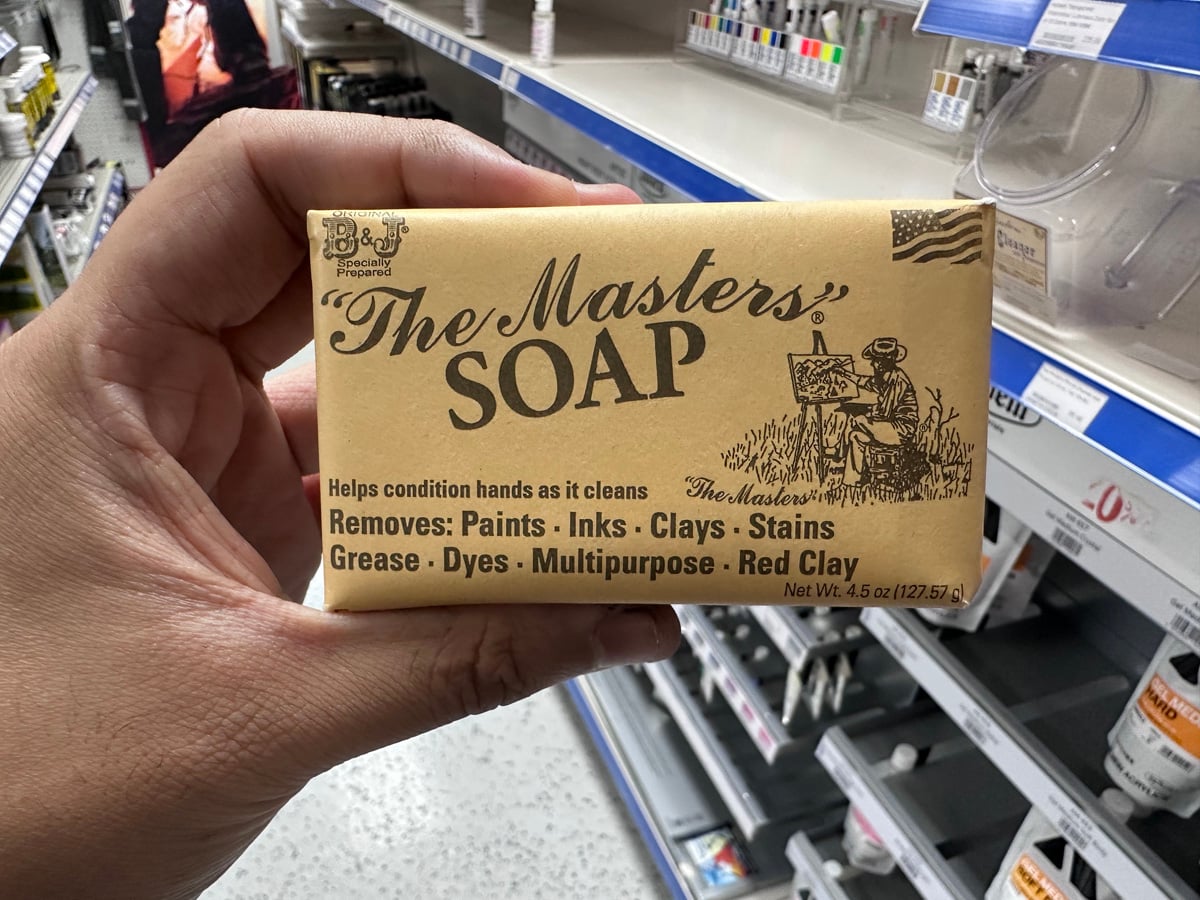
For the brush cleanup, the Masters Soap line is incredibly effective at cutting through the enamels in the brush whilst keeping it gentle for your hands! It’s still a soap after all
That’s it! We’re done
Seriously, that’s it. That’s how you use enamel washes! This same technique completely crosses over to Tamiya Panel Liners and Gundam! They use the exact same technique because Tamiya Panel Liners are just enamel washes. Hopefully I’ve converted some of you onto the side of enamel washes and streaking grime!
Before I go, I’ll leave you with some more pictures but this time it’s the application of winter and dark streaking grime plus the finished effect!
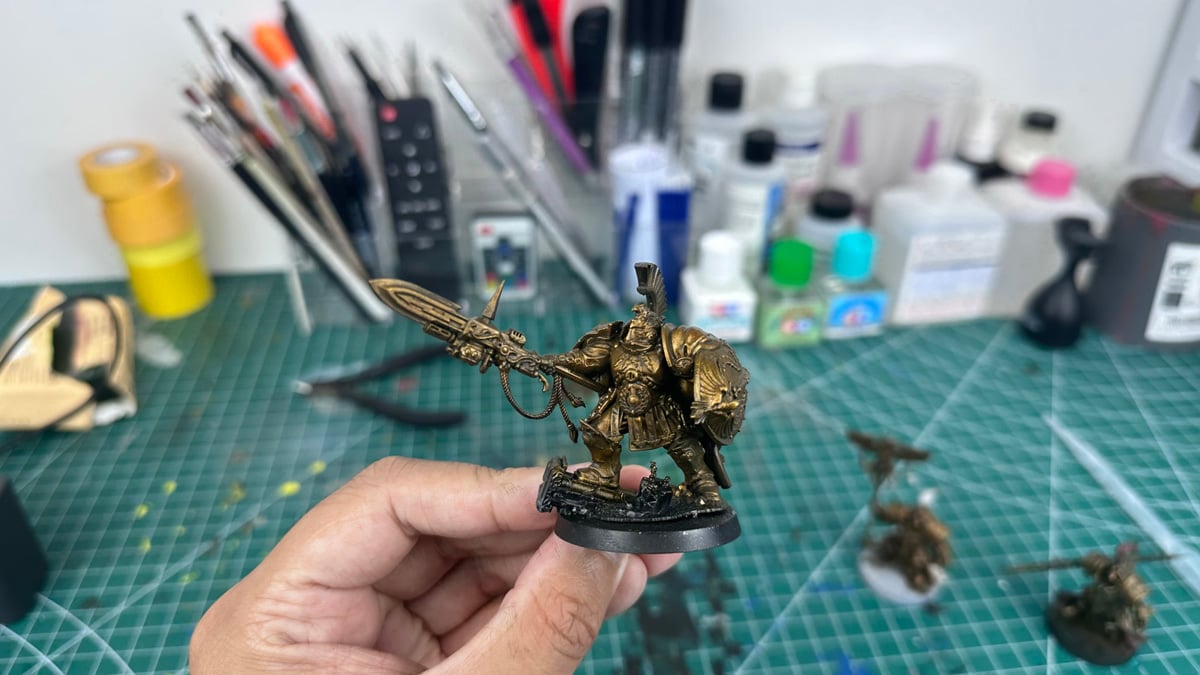
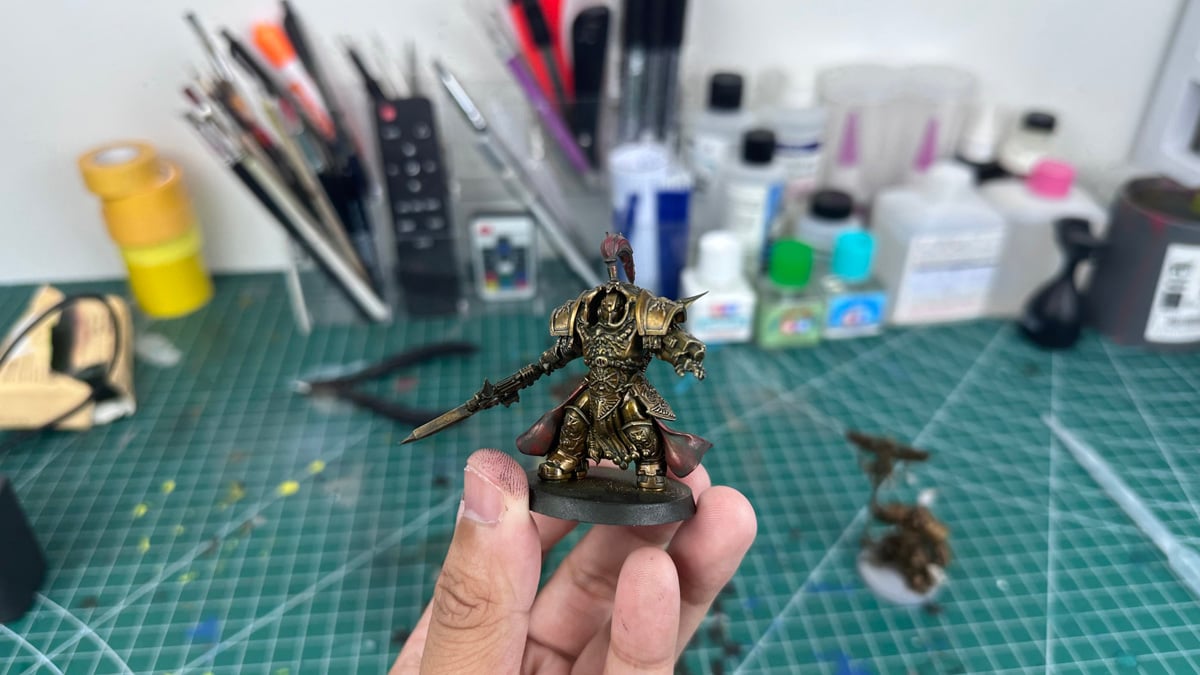
The finished results for both miniatures! First one has winter streaking grime applied on it and the second has dark
That’s it! Thank you for reading this article! Hopefully you found this to be informative, especially if you’ve only been using acrylic paints! There’s no need to be afraid of enamel washes! They’re better than the acrylic washes that we’re all used to at this point!
See you on the next one!
About the Author:
Paul Catindig As someone who’s been building model kits since he was 8 years old, Paul is very knowledgeable and adept at model kit building! When he’s not building or painting kits, he spends his free time cooking, playing video games with friends, or at a restaurant patio somewhere. Hopes to make his very own movie one day.