

Tech-Tips by Harvey – Where to Start
The use of putties in scale modelling is as fundamental as glue itself. It is however ironic, that the use of putties as mentioned in scale modelling magazines, only became more prevalent in the 1980’s as modellers began to realize that those pesky seams or sink holes on models could not simply be left alone. They are now a core product used to fill seams, sink-holes and other imperfections.
First let’s begin with what putty is made of? There are four kinds: 1) Lacquer-based; 2) Water/Acrylic-based; 3) Two-part Epoxy Putty; and 4) the newer Liquid-type putties. Lacquer-based putties are made of dissolved plastics, acrylic resins, or vinyl polymers suspended in a strong chemical solvent (such as lacquer thinner or acetone). So with the exception of water-based putties, use these in well-ventilated areas. They work by hardening as the solvent evaporates. Because they contain aggressive solvents, they slightly melt into polystyrene plastic to create a strong mechanical bond, though they can shrink as they dry.
Because putties shrink a bit, it is slightly sometimes required to apply more than one coat. Apply them in thin layers, letting each layer dry first before adding another layer. Although Acrylic putties tend to shrink less.
All types of putties can be used on plastic, wood, or metal, and can be thinned with lacquer thinner (except the water-based ones). Apply putties with a wood stir-stick, toothpick, or small spatula. A tip is to apply CA glue onto dried putty, as this helps reduce multiple layers. Once dry, they all are a great foundation for successive sanding.
Is one-type better than the other? Not really. It comes down to personal preference, severity of the seam/gap, and purpose (fill sink holes, or more subtle application for those hard to remove “ghost-seams”).
To help navigate through all the brands, here are the more common brands:
Lacquer/ Solvent Based Putties
Tamiya
The most common and in my humble opinion “go-to” putty is Tamiya. It comes in both white 87095 and traditional Basic grey colour 87053. Now it could be me, but I prefer the grey-coloured putty as it seems to adhere better and is a touch thicker and thus a bit better for tough seams.

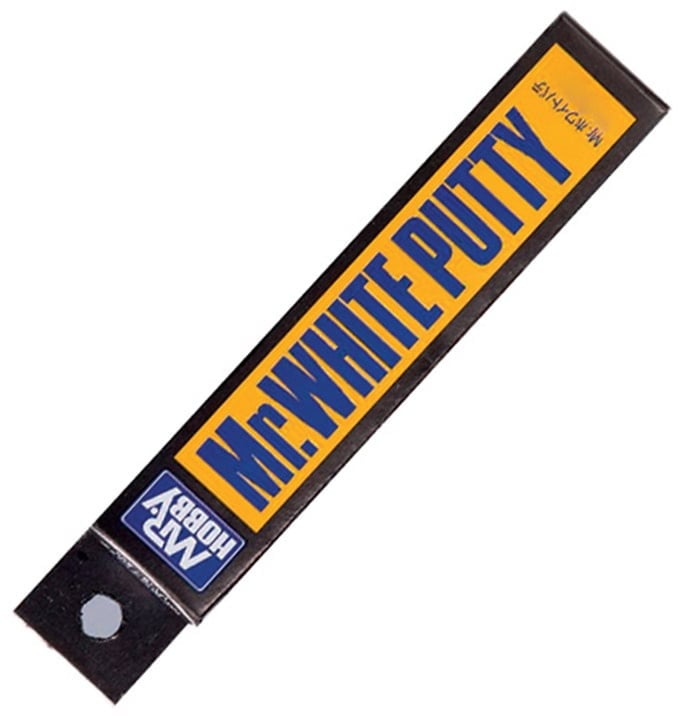
Mr Hobby White Putty
More popular in the GUNDAM community it features a smooth, melted-plastic-like paste consistency that is notably finer and less grainy than older alternatives like other white putty. It applies straight from the tube without pre-mixing. It air-dries in a few hours depending on the thickness of the application. Like most solvent-based fillers, it can experience some shrinkage as it cures, meaning deeper or wider gaps may require multiple thin applications. Once fully dry, it hardens nicely, sands down very smoothly, and holds up well to scribing or panel-line cleanup.
Mr Hobby is available in White P118 and Low Viscosity P123
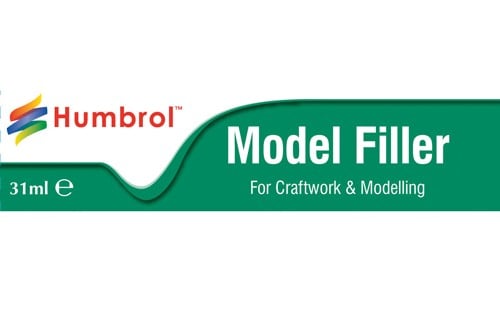
Humbrol
Impossible to get in North America, this is one of my favorite as it is thicker and better for deeper sinkholes or seams. It dries very hard with somewhat less shrinkage that Tamiya. Oh, and you can use these putties over other putties once the previous layer had dried. I use Humbrol putties this way if the seam is not fully filled with a previous putty..
Water/ Acrylic Based Putties
Vallejo Plastic Putty
Not as common as Tamiya putty, Vallejo Putty 70401 is water-based and a good choice to avoid the chemical smell. Use rubbing alcohol to thin acrylic putties.

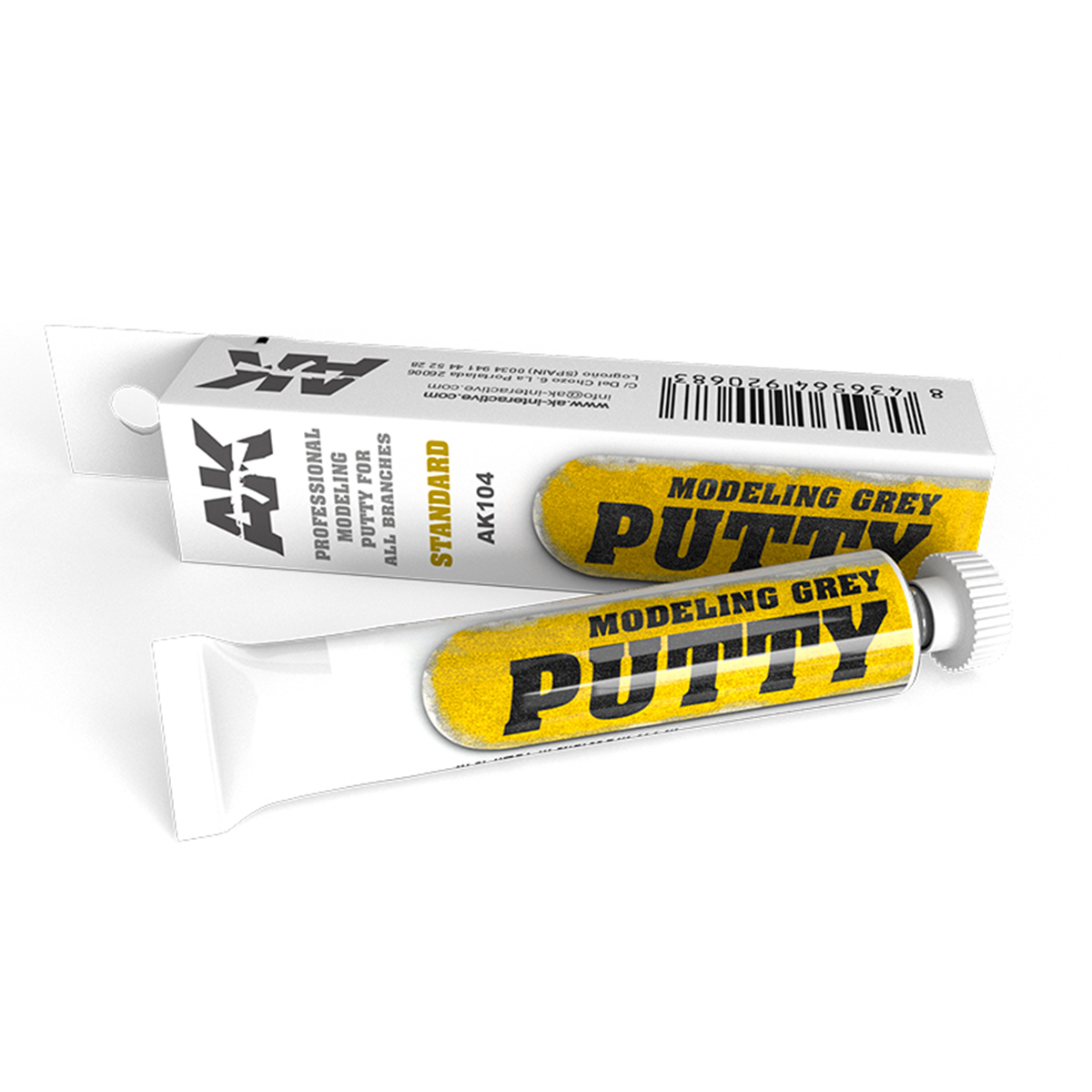
AK Interactive Putty
Another “water/acrylic -based” putty is AK Interactive AK104 Putty. About the same as Vallejo, but this putty is good in that it does not lift the underlying paint like others might.
Two Part Epoxy Putties
They are used to fill deep irregularities, but also to make structured items with more body such as tarps, bedrolls, or simulated clothing by rolling it very thin and then shaping it.
These putties require pre-mixing (actually kneading) of two equal parts before they can be used. They are non-toxic in the sense they do not omit an odor. I have found that I can even knead the putty without gloves, but suggest using them if you are allergic in some way. They take much longer to cure – usually 24 hours is best.
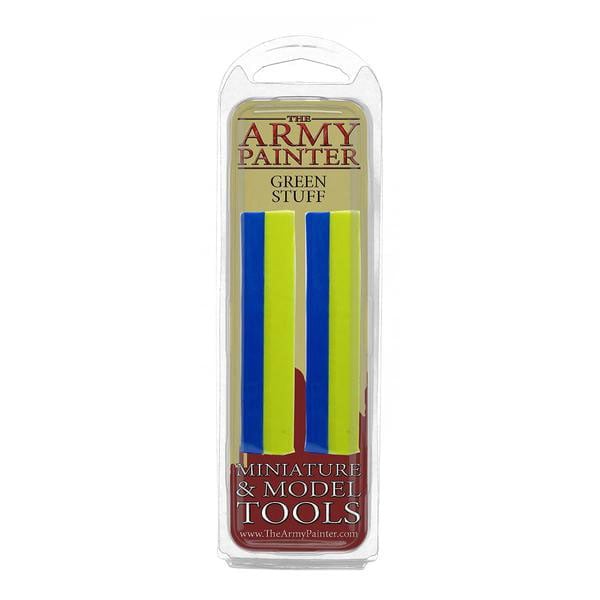
The Army Painter Green Stuff
The Army Painter TL5037 very good putty I used all the time! Like all epoxy putties, I keep mine in sealed zip-lock bags once I open them.
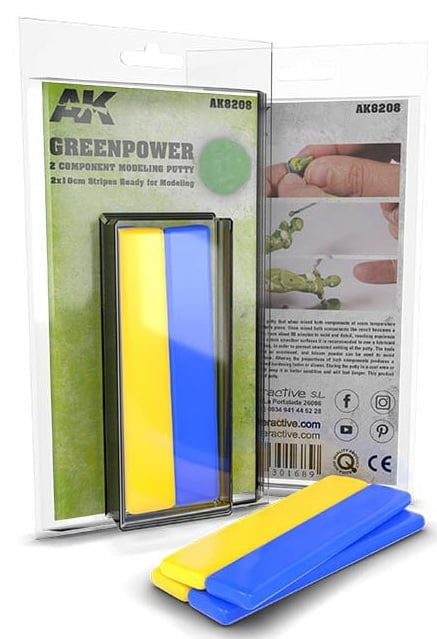
AK Interactive Green Power
Similar to The Army Painter Green Stuff Putty AK Interactive Green Power 8208 is a very good putty.
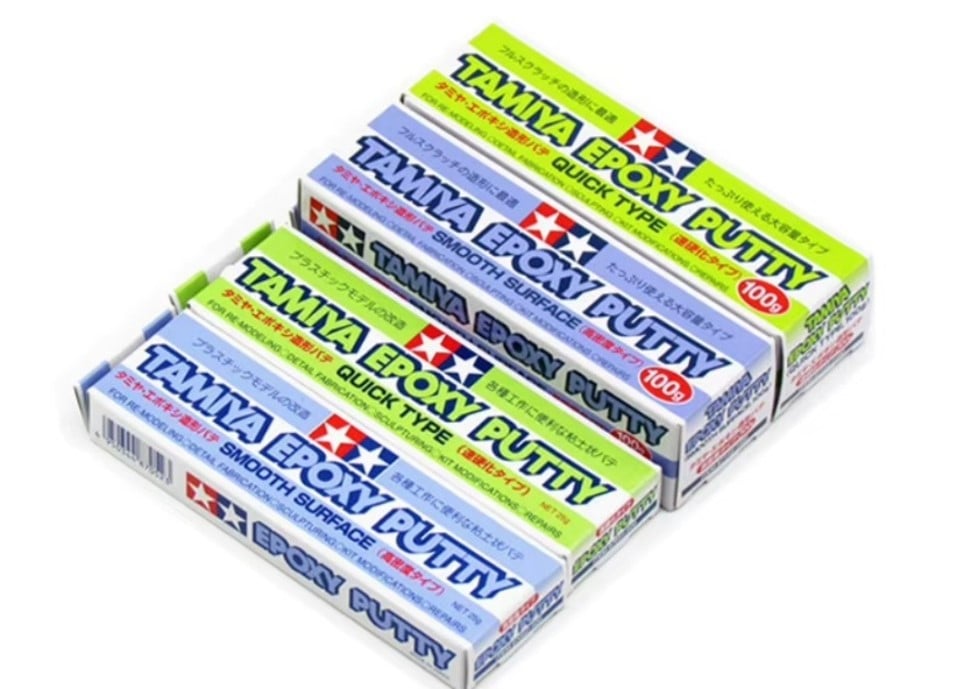
Tamiya 2 Part Epoxy
Comes in different types as seen here. All are very good putties. These include Smooth Surface 87052 and 87145, Quick Type 87143 and 87051.
Milliput
Another common putty and very similar to the others. Milliput also come in different colours.

Liquid Putties
These putties are in their own category as “liquid” type putties you apply by paintbrush that act as “surface fillers”. They serve as more topical applications over thinner seam lines that require final finishing if small irregularities still exist. They come as both Lacquer and Water-based. I want to note that I find the water-based liquid putties, very useful as they are thinner than lacquer liquid putties and have no odor, being applied by brush.
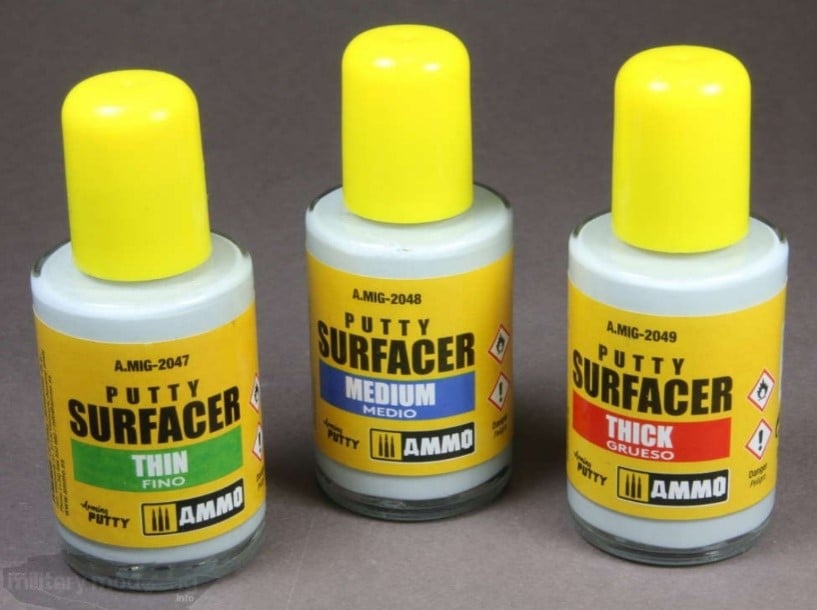
Ammo by Mig Putty Surfacer
A lacquer-based putty in three viscosities. A newer product as of November 2026. These include Thin AMIG2047, Thick AMIG2049, Medium AMIG2048.
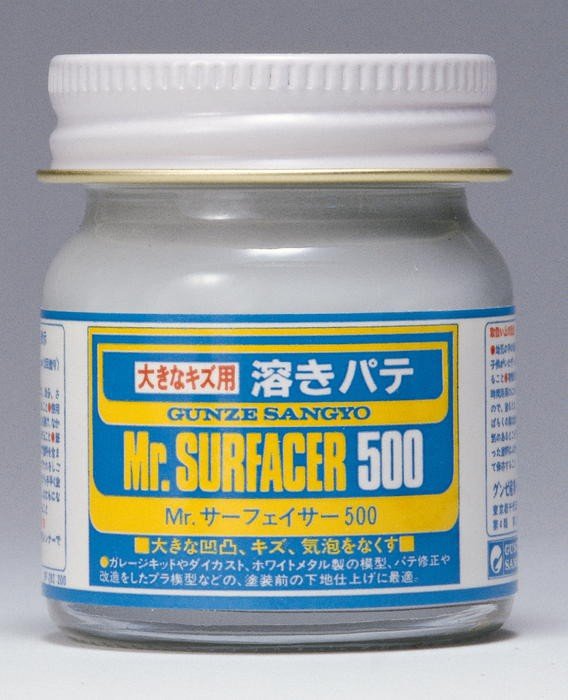
Mr Surfacer 500
Mr Surfacer 500 in bottle SF285, and Spray B506, are another lacquer-based putties. Although many use it as a primer thinned and sprayed through an airbrush, it can be used directly from the bottle and applied by brush as a surface filler. Note that this product needs to be sealed in a zip-lock bag once opened, as they tend to thicken over time in the bottle. They are excellent surface fillers, but have the strongest odor of all putties.
Mr Dissolved Putty P119
Mr Dissolved Putty P119 is an excellent water-based surface filler, that I find one of the best out there due to its ease of application. No odor, fast drying, and very resilient when dry.
image
About the Author:
Harvey Low has been building plastic models since age eight and fast-forward fifty years and he is still building. Now professionally full-time for clients, museums, and magazines. He has written well over thirty articles for mainstream magazines such as FineScale Modeler, and Scale Aircraft Modelling. His specific interests are WW2 Japanese and Italian subjects.
Harvey has been competing in model contests since 1981. He has competed internationally and in 2018 achieved Master Class at the US AMPS national convention. Harvey currently helps run the local Toronto chapters of IPMS and AMPS Fort York Armour modelling club.